Build lawn quotes from the area your crew will actually mow
The square footage inside a house cannot price the grass outside it. Give your quote desk a way to identify the actual mowing area and the access your crew needs. Confirm uncertain boundaries before turning a website inquiry into a recurring-service offer.
Steps
-
Collect the service property and requested work Ask which lawn areas the customer wants serviced.Record gates, access and preferred frequency.
Use a request form with service address, contact details and the areas the homeowner wants included. Ask about front, side and rear lawns, gate access and known obstacles. Let the customer say they are unsure of the area.
Check whether the request concerns mowing, an overgrown first cut or another service. Have the crew lead decide when the initial condition requires a separate assessment or scope. Keep preferred frequency and your actual route availability as separate fields.
-
Keep homeowner context separate from mowing measurements Review available property fields for context.Verify lawn boundaries independently.
If PipelineOn is live, review available contact, address and page activity after checking the inquiry connection. The public demo includes estimated home value and living area. Those fields do not measure the lawn your crew will maintain.
Use the customer's requested areas and your own assessment process to establish scope. A shared address can help find an existing account, but it cannot determine gate width, lawn condition or the equipment that can reach the rear yard. Record those checks on the service property.
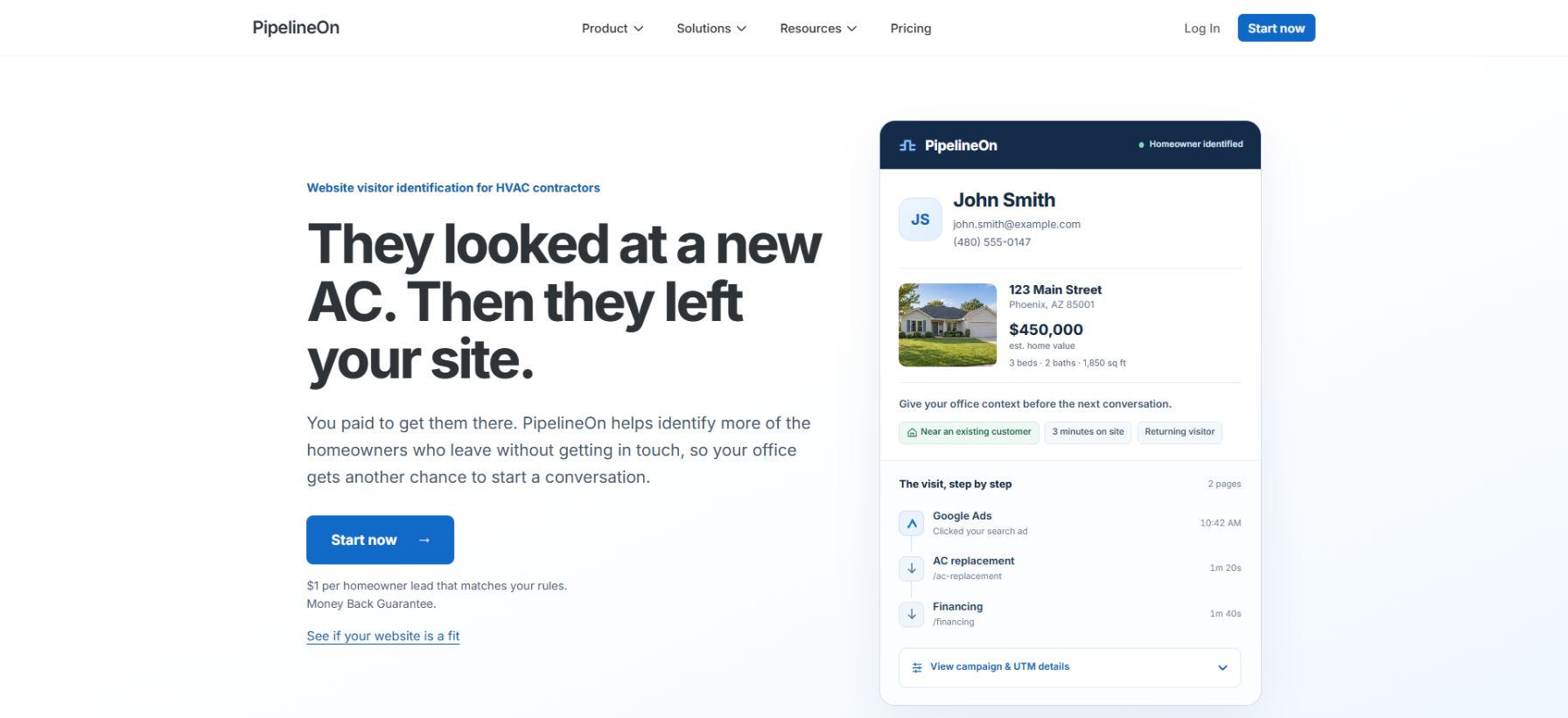
PipelineOn’s public demo record shows where the visit came from and which pages were viewed. Source -
Measure a preliminary area and flag uncertainty Use a consistent area-measurement method.Confirm uncertain edges and access before the final offer.
Google Earth provides distance and area measurement tools. If your quote desk uses it, outline the visible areas the customer requested and save the measurement method and date. Exclude buildings, hardscape and areas outside the agreed service boundary.
Google notes that its measurements may not be fully accurate. Treat imagery as preliminary when trees, old imagery or unclear boundaries affect the estimate. Ask the homeowner to clarify or arrange a site check. Have your crew validate the working area and access before relying on the quote.
-
Check the first completed cut against the quote Confirm route fit and accepted scope before scheduling.Record actual crew time and scope corrections.
Give the crew the confirmed areas, access notes and service agreement. Confirm that the property fits the route before offering the recurring day. Record a first-cut assessment separately when it changes the work your company is accepting.
After the first visit, compare the actual time and included areas with the quote. Record why a scope changed and communicate any revised agreement through your normal process. Use corrected area and access records for future quotes instead of carrying a living-area field into the pricing calculation.
What to measure
Review quotes corrected after the first visit, access failures and actual crew time. Improve the measurement and intake fields that caused avoidable differences.