Test whether a lawn quote email adds completed first cuts
Some lawn quotes will convert after your normal follow-up. To learn whether an extra email helps, give comparable undecided quotes different follow-up assignments before anyone sends it. Follow both groups through to the first completed cut.
Steps
-
Define the quote group and the extra message Choose eligible undecided recurring-mowing quotes.Keep ordinary requested service in place for everyone.
Choose quotes with a confirmed property, current price, serviceable route and no accepted booking. Exclude active conversations, suppressed contacts and any request that needs an immediate operational response. Write down the normal follow-up everyone will continue to receive.
Test one extra message with a clear next step, such as asking whether the homeowner wants to discuss the quoted mowing schedule. Set the observation period and define completed first cut from the actual job record. Agree who owns replies before beginning.
-
Assign the groups before looking at responses Randomly assign eligible projects and save the assignment.Keep each household or project in one group.
Use a reproducible assignment process your analyst can check, such as a spreadsheet random value saved as fixed values before sending. Randomly allocate eligible projects to the extra-email group or the normal-follow-up group. Keep the original assignment and any exclusions in the test log.
NIST's randomized-design guidance describes random assignment to treatments. Keep route, quote age and service scope comparable when planning this pilot. Avoid assigning the most promising quotes to the email group after review, and do not move a nonresponder into another group during the test.
-
Send the tested email and preserve its response path Use the same approved extra message for the assigned group.Check source delivery and stop messages after a reply.
Send a test to an address you control, then inspect the link, reply inbox and office task. If the message uses a Tally request form, save the campaign label in a hidden field and verify it in the accepted submission. Keep names and addresses out of the URL.
Send the extra email only to its assigned eligible group. Handle replies normally and stop follow-up after acceptance, decline or opt-out. Record delivery failures and any staff departure from the assignment. Keep all assigned projects in the outcome review so exclusions after sending cannot improve the apparent result.
If PipelineOn is already installed, track available quote-page activity for an exploratory read after the test. Keep every project in its assigned group and skip extra outreach based on return activity until the comparison ends.
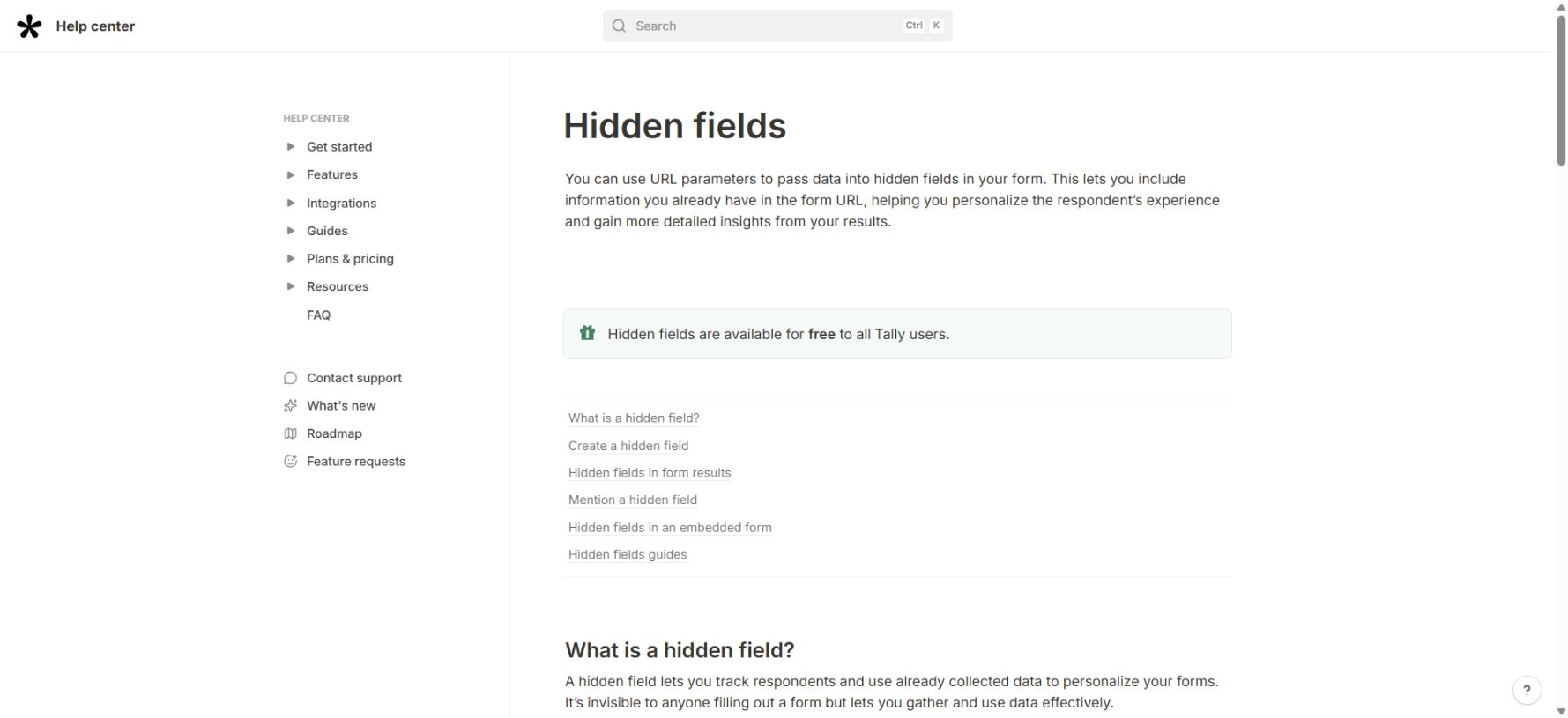
Tally’s public documentation shows how to carry a campaign label into a submitted form. Source -
Compare completed first visits and the cost of the extra work Use all assigned projects and equal follow-up time.Treat a small pilot as evidence to investigate further.
For each group, report assigned quotes, delivery failures, replies, accepted service and completed first cuts. Divide completed first cuts by assigned projects and show the underlying counts. Include staff time and message costs when reviewing the practical result.
Allow the same elapsed time for both groups and keep canceled visits separate. A small difference from a small pilot carries uncertainty. Ask your analyst to review that uncertainty before scaling. Use the pilot to decide whether to repeat the test, improve the offer or stop the extra email.
What to measure
Keep the assignment log, exact email and completed-visit records together. The useful decision is whether the added follow-up earns enough additional work to justify its cost.