Fill openings on your leaf cleanup route from a ZIP-based waitlist
A truck finishes early and you could fit another yard nearby. Give the office a short list of homeowners who asked for the work and know a booking still depends on capacity.
Steps
-
Make a leaf cleanup page with a waitlist Describe the work your crew can takeShow what the waitlist means
List the work you offer and explain how you’ll confirm timing, price and what happens to the leaves. Use your actual disposal arrangements to set expectations.
Label the form as an optional short-notice request. Let callers choose another quote route if they need a longer lead time.
-
Save the service address with the request Capture ZIP and preferred contact methodSend a clear acknowledgement
Test a ZIP inside your territory and one outside it. Keep confirmed address eligibility in your office queue even if both submissions get a receipt.
Use your form notification to send the record to dispatch. Ask dispatch to mark which neighborhoods are still open for a crew.
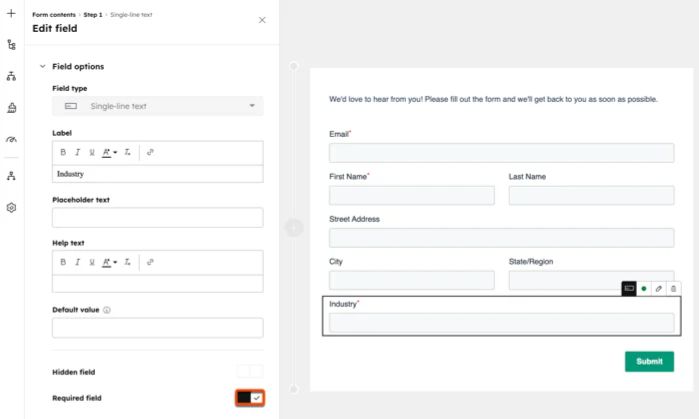
HubSpot’s form editor shows the Required field control for a form field. Source -
Work from real gaps in your route Match address and crew windowConfirm the terms before booking
Pick one available block of time, then check which waitlist requests could fit the drive and scope. Ask the homeowner to confirm the actual window and quote.
Check for an existing open request before creating anything from an eligible PipelineOn visit. Use ZIP and page context as a reason to review records.
-
Measure route hours and filled work Count accepted slots and completed visitsRecord drive and disposal changes
Take one afternoon and compare the crew’s expected route with the jobs actually completed. Note which replacement job added time outside its quoted scope.
Adjust your next short-notice batch by the neighborhoods and work your crew can fit.
What to measure
Let homeowners ask to be called when a nearby opening exists, then use real crew availability to fill it.