Recheck old cabinet painting estimates when homeowners return
An old cabinet quote may assume the doors, finish and kitchen layout you saw last year. When a homeowner comes back, give the estimator the original scope and a short list of things to confirm. A useful callback starts with whether that project still exists in the same form.
Steps
-
Build a review list from actual cabinet estimates Find paused cabinet projects with an assigned estimator.Check scope, status and contact preferences before follow-up.
In HubSpot or your existing CRM, filter the deals your office uses for cabinet painting. Open the attached estimate and confirm that the deal is still paused or unsold. Remove completed work, declined projects, active conversations and contacts your office should not approach.
Save the original door and drawer count, proposed finish, preparation assumptions, access arrangements and quote validity. Mark missing information for the estimator. In HubSpot, check the contact's subscription status for the channel you intend to use. A previous quote does not establish eligibility for every new marketing send.
-
Check whether the returning record belongs with that quote Review available cabinet-page activity.Leave uncertain household matches outside the deal.
With PipelineOn already installed, review available matches that viewed your cabinet service or finish pages. Compare reliable shared contact details with the existing CRM record and read the estimate history. A shared address can identify a household while leaving the person at the device uncertain.
Keep the quote open beside the visitor record. Record which details support the connection and leave ambiguous records for review. The public demo below shows the type of available page activity to inspect. It is an HVAC example. A visit does not tell you that the old scope is unchanged or that the homeowner wants another call.
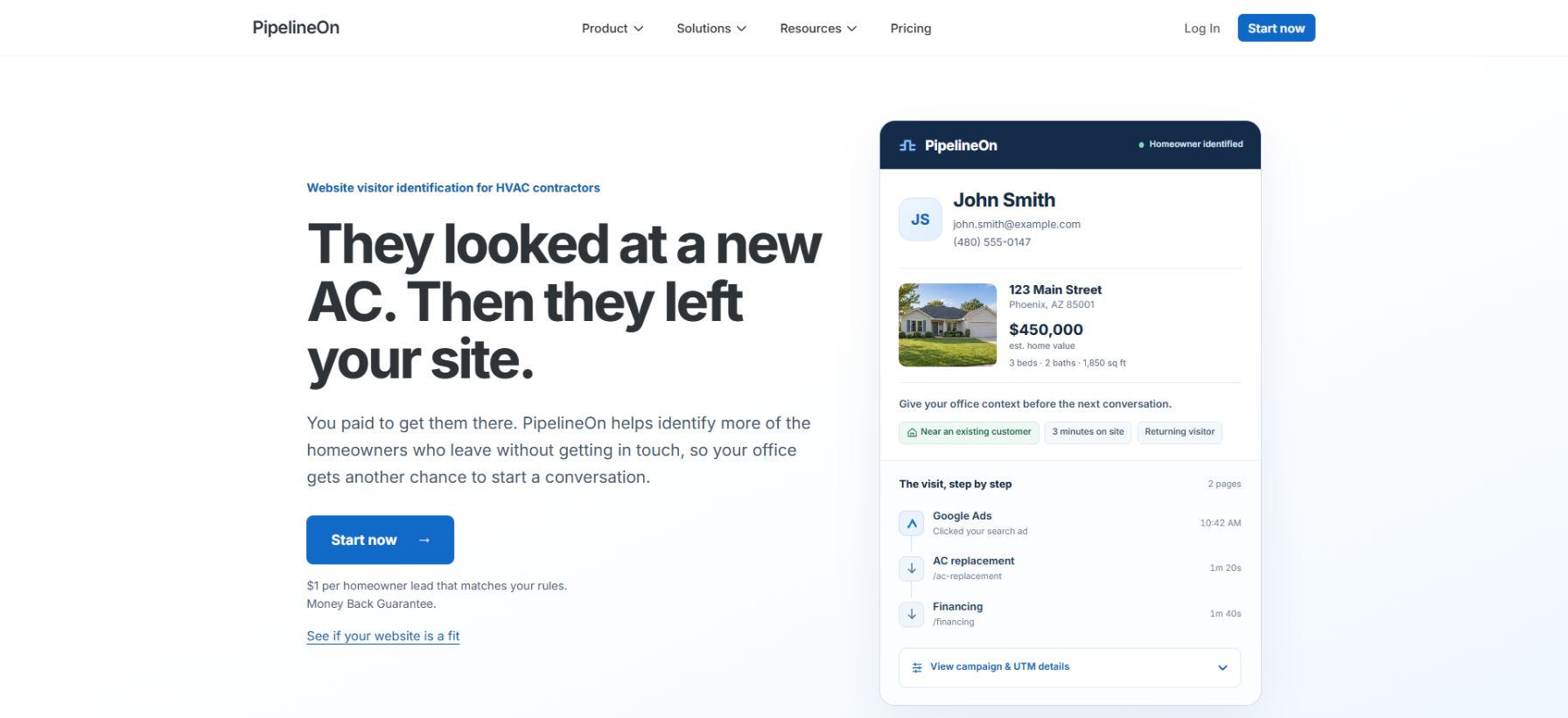
PipelineOn’s public demo record shows where the visit came from and which pages were viewed. Source -
Give the original estimator a scope question Act on replies and update requests first.Ask what changed before offering the old price.
Assign an eligible follow-up to the original estimator with the prior quote and the reason for review. Use a direct question such as “Are you still considering painting the existing cabinets, or has the kitchen plan changed?” Let the answer determine whether the next step is a call, revised scope or new visit.
Confirm whether doors were replaced, hardware changed, damage appeared or another contractor started work. Have the estimator decide which changes require an inspection. Send a relevant preparation page only when it answers a question from that conversation. Keep the original acquisition source on the deal.
-
Record the scope decision before reopening the calendar Update the existing deal and attach the current quote.Separate scope calls, revisits and accepted work.
Record whether the project is unchanged, needs a revised quote, needs another visit or is no longer going ahead. Keep the prior estimate in the history and make the current version clear. Assign the next task and due date to one person.
Review estimator time, useful conversations, attended revisits and accepted cabinet jobs from this list. If returning records rarely connect to the right old project, improve the matching review. If most projects changed substantially, schedule a fresh assessment before preparing another price.
What to measure
Judge this review by the old cabinet projects that reached a clear scope decision and useful next appointment. Keep website matches, reopened conversations and accepted quotes as separate counts.