Keep spring irrigation service separate from new landscape installs
An existing client can request spring irrigation service and ask about a new planting project in the same message. Your maintenance team needs the system history. Your installation estimator needs the new scope. Keep both requests owned without creating two visits for the same service.
Steps
-
Check the property and irrigation service history Find the actual system and last completed service record.Check existing bookings and maintenance terms.
Match the request to the correct property and current authorized contact. Open the irrigation records your crew uses, including prior visit notes, system information and unresolved issues. Confirm whether a spring service is already booked or included under an active agreement.
Ask what the client wants done now and what they report about the system. Let your irrigation team decide the appropriate service and preparation. Keep requests for repairs or a larger installation visible for review instead of assuming every spring inquiry is the same appointment.
-
Collect maintenance and installation scope clearly Let the client request service and describe additional work.Keep each request's purpose in its own history.
In HubSpot's form editor, build a service request with contact details, property address, requested visit and reported issues. Give additional landscape work its own description field or a separate request path. The screenshot shows the form editor where you choose the fields.
Review the object each form field updates. Save the accepted maintenance details in the service record and the installation scope in the appropriate sales opportunity, using a manual handoff if necessary. Keep the original submission available because a later contact-property update should not erase what the client asked for.
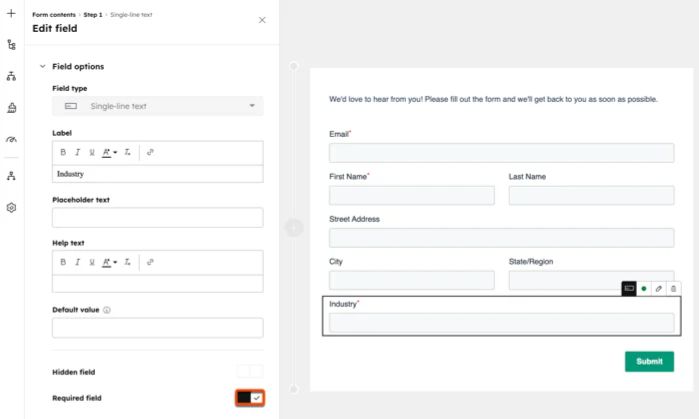
HubSpot’s form editor shows the Required field control for a form field. Source -
Assign the service visit and the estimate independently Give maintenance dispatch the service record.Give the installation estimator the new scope and access notes.
Maintenance dispatch checks route capacity, system notes and existing appointments before confirming the spring visit. Assign the new landscape request to an estimator only after checking whether an opportunity already exists. Tell the client whether these are separate conversations and whether either visit is confirmed.
Test a combined request from an existing customer. Verify that maintenance receives the service details, the estimator receives the new scope and each owner can see the related request. Confirm that a second form submission cannot silently create a duplicate maintenance booking.
-
Measure maintained properties and new projects separately Track completed irrigation visits against service records.Track new installation estimates and accepted projects separately.
Close the maintenance task after the completed service is recorded. Keep additional repair recommendations with the appropriate service process. Record an attended landscape estimate and accepted installation on the new-project opportunity. Preserve the existing-client source for that request.
With PipelineOn already live, available returning-page activity can help your office review customer context after verifying the connection. A visit to an installation page does not create a new project. Use the client's submitted scope and the assigned staff member's conversation to decide the next action.
What to measure
Review duplicate service corrections, completed spring visits and attended installation estimates. Improve the intake when one team repeatedly receives the other team's scope or appointment.