Put a human scope check between cleaning chat and checkout
A website chat can uncover rooms, conditions or extras your standard cleaning offer does not cover. Give those requests a human owner before sending checkout. The customer needs an accepted scope that your crew and payment page both recognize.
Steps
-
Define which chat questions need a scope reviewer Use your actual cleaning inclusions and exclusions.Name the person who can approve an exception.
Have the cleaning lead list the requests a standard checkout can accept and the situations needing a separate review. Include the information the reviewer needs, such as rooms, requested extras, access and timing. Keep the customer's reported condition separate from your team's assessment.
Write a useful chat message explaining that someone will confirm the requested scope and response time. Keep price exceptions, staffing and availability with the authorized reviewer. Do not let a generic reply silently expand the paid service.
-
Create a website chat path the office can actually answer Choose the supported widget and published destination.Test the conversation in the correct inbox.
If using HighLevel, create a Live Chat widget from Sites, Chat Widget and deploy it through the supported method for your website. Its documentation covers the widget and website or funnel installation. Confirm your account access and intended channel before relying on it.
From a staff-controlled browser, submit a request outside the standard scope. Check the actual conversation, customer reply path and reviewer notification. If the office is closed, give an accurate callback expectation. A widget appearing on the page does not establish that someone received the message.
-
Add website context only after connecting the actual request Keep chat identity and homeowner matching separate until verified.Check existing cleaning bookings before another task.
With PipelineOn already live, available page activity may help explain which offer the customer saw. Verify reliable shared contact details before attaching that record to the chat. Keep uncertain household matches separate. The demo shows visit context, not a chat inbox or accepted cleaning scope.
If tracking is new, install through your platform's instructions and verify the exact website first. WordPress activation alone does not make it live. Preserve the actual chat request and its source even if no homeowner match is available.
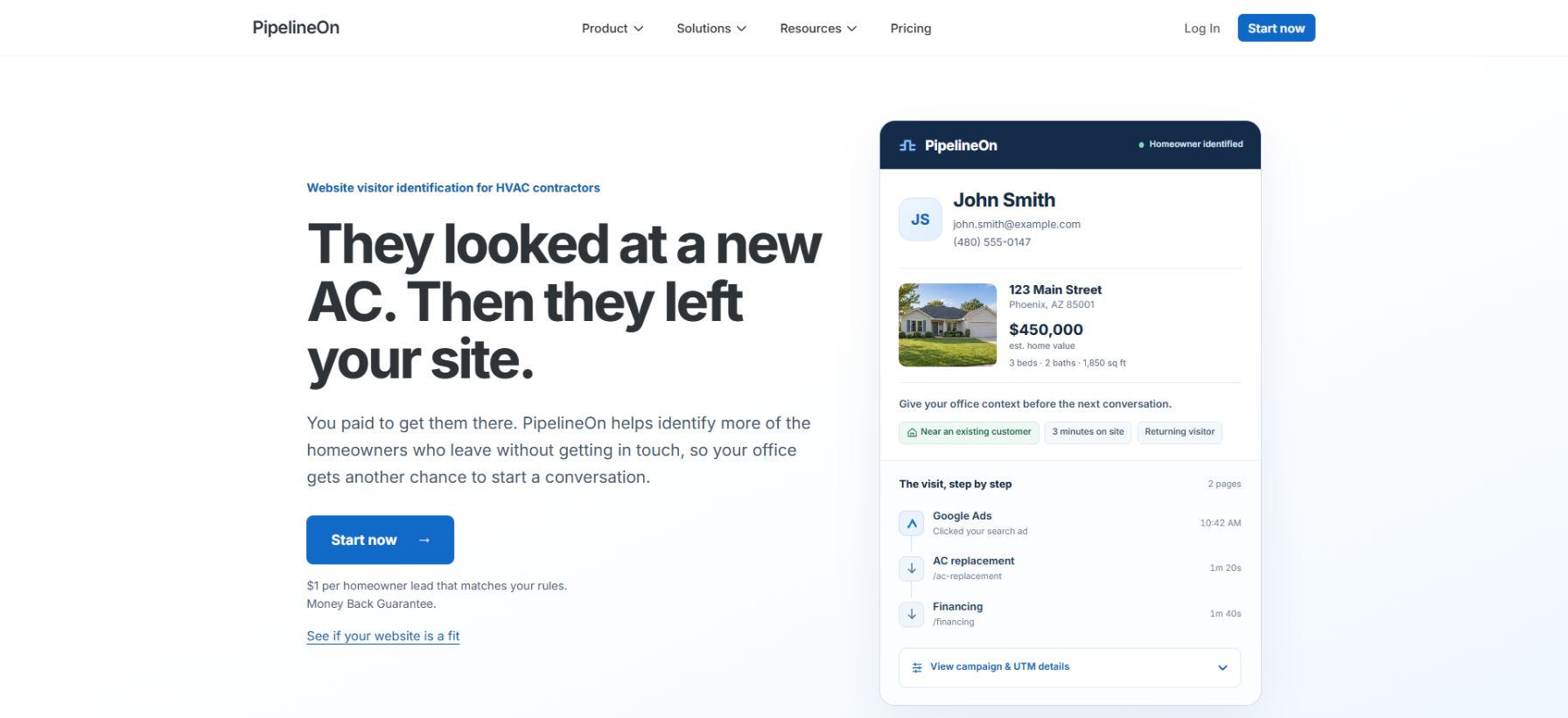
PipelineOn’s public demo record shows where the visit came from and which pages were viewed. Source -
Approve the revised scope before checkout Give the customer the reviewed service and actual next step.Verify scope agreement, payment and calendar separately.
Have the reviewer confirm whether your company accepts the request and what the service includes. Preserve the customer's approval of the current scope through your normal process. Send the appropriate checkout or quote only after that review.
Prioritize exceptions affecting an existing imminent booking, then new requests the office can service. Keep resource questions and unconfirmed matches out of booked-job totals. Review accepted scopes, payments, confirmed appointments and completed cleans to find where an exception was lost.
What to measure
Test one standard request and one exception through chat to the reviewed scope. The customer, office and crew should receive the same approved description before payment or dispatch.