Check attic page fit and crew ZIP rules before raising Meta spend
More Meta traffic gives your office more useful insulation opportunities only when the page and crew coverage fit the offer. Run a small operational check before increasing the budget. Use real inquiry addresses for dispatch and review available visitor context separately.
Steps
-
Compare the ad promise with the landing page Use one defined insulation serviceState the real coverage areaExplain what happens after a request
Have your estimator read the ad and landing page together. An attic assessment ad should lead to that assessment, with its scope, access process and any fee explained. Avoid sending it to an unrelated removal or whole-house offer.
Check the page on a phone and submit a controlled request. Confirm that homeowners can report uncertainty about access or existing material without inventing answers. Give the office enough context to arrange an appropriate professional assessment.
-
Have the crew approve today's service ZIPs Check coverage for this serviceRecord boundary streets and exceptionsTest address routing
Ask the crew lead and dispatcher to approve the ZIP list for attic assessments and the resulting installation work. Confirm travel limits, scheduling availability and services each crew handles. A ZIP can include streets outside a practical route.
Test one covered address, one excluded address, one boundary case and one missing address. Use the service property supplied by the customer to route the request. Keep Meta's audience location selection separate from the actual property your crew would visit.
-
Verify PipelineOn page and ZIP qualification rules Review the intended website and page rulesCompare available property ZIPsHold missing or conflicting records for review
PipelineOn offers page and ZIP rules for selecting which matched visits qualify as paid leads. Check those settings against the approved insulation service and crew list. Treat downstream office assignment as its own step and confirm the receiving person.
The shared public demo screenshot shows HVAC homeowner fields and a visit timeline. It explains the kind of context to inspect, with no proof of your attic rules. Some visitors can be identified, and available fields vary. A match has not requested an estimate and does not establish permission to text.
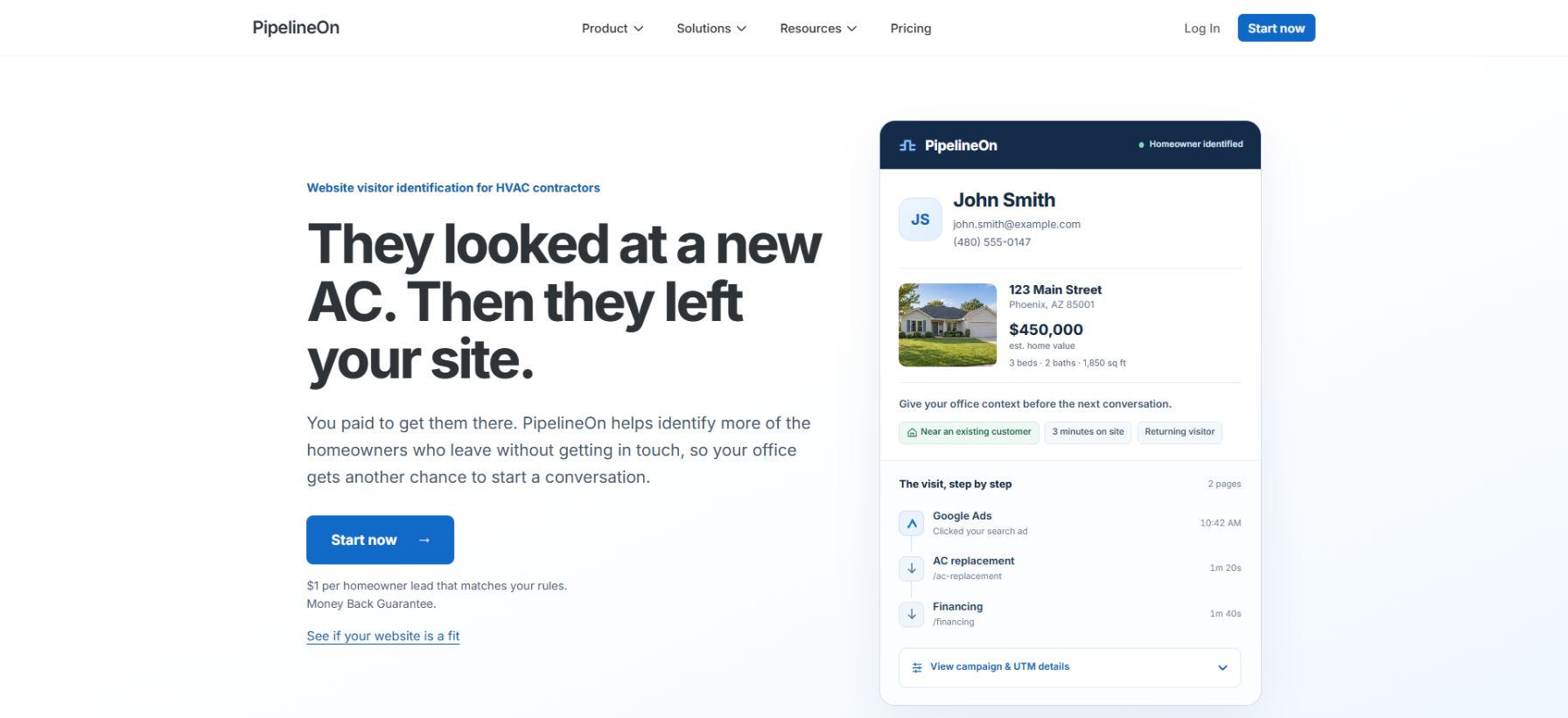
PipelineOn’s public demo record shows where the visit came from and which pages were viewed. Source -
Increase spend only after reviewing useful outcomes Review inquiries and matches separatelyTrack access-qualified assessmentsKeep the crew capacity decision current
Take a small recent sample and compare the ad, visited page, service address, office route and final outcome. Record outside-area inquiries, page mismatches and missing details. Fix repeatable routing errors before increasing the affected campaign.
Review spend, qualified requests, completed assessments, proposals and sold work with the estimator. Count reviewed visitor matches separately from inquiries. If qualified requests fit but assessment slots are full, set the next budget decision against the crew's updated capacity.
What to measure
Keep the approved page, ZIP list and test results together. Recheck the handoff when the campaign offer or crew coverage changes, then judge added spend by completed assessments and sold work.