Route missed attic inspection callbacks to the right coordinator
An attic inspection caller may need a basic estimate, a home performance assessment or help understanding a program requirement. Recover the missed call with its original context and ask which service they need. Then assign the person who can arrange that visit.
Steps
-
Recover the missed call and its available source evidence Keep the callback number, call time and original record.Review available page history without treating it as a diagnosis.
Open the missed call in your phone system and record its ID, time and callback number. With CallRail visitor tracking, inspect the caller timeline for available source and page history. A visit to an inspection or program page can guide your first question.
Keep missing history marked unknown and return the call through your normal process. A static number or an untracked session may have no useful web trail. Save the original source field before assigning the callback so a new coordinator does not overwrite it with a generic office label.
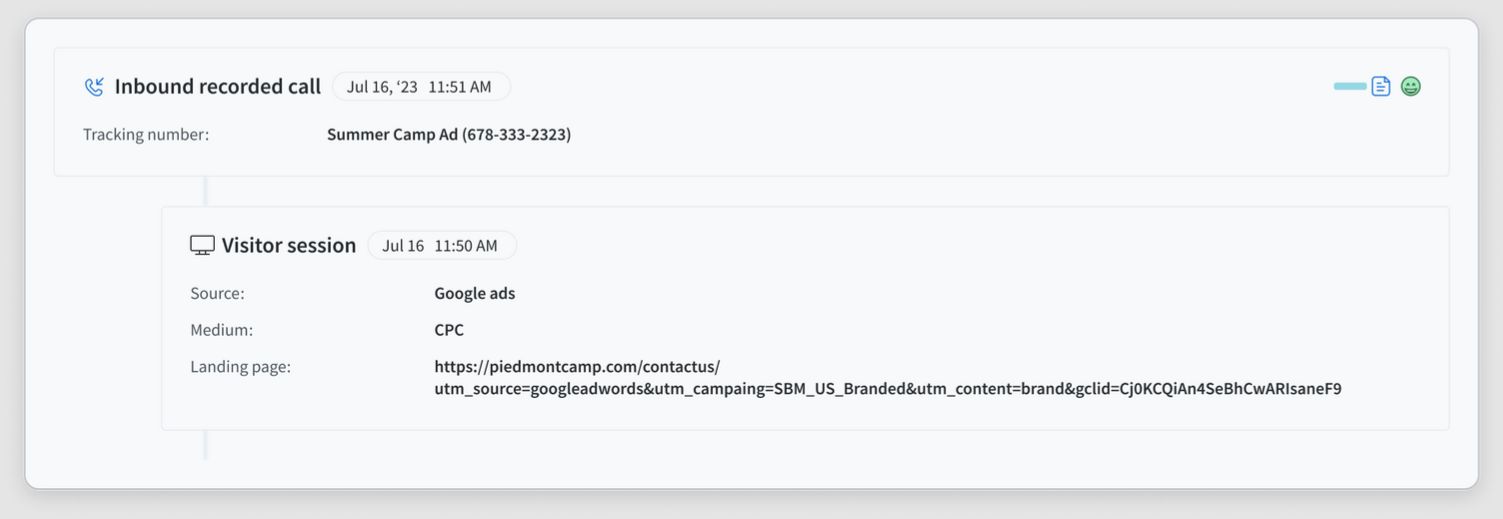
CallRail’s example of the visitor session attached to a tracked call. Source -
Ask what assessment the homeowner actually requested Confirm address, purpose and any named program.Check for an existing appointment before creating another request.
Ask whether the caller wants an insulation estimate, a whole-home assessment or another specified inspection. Record any program name and deadline in the homeowner's words. Find the current customer record and any open assessment before making a second appointment.
Ask about access arrangements and known concerns only to prepare the handoff. Send technical questions to the qualified assessor. Page activity and a homeowner's description do not establish which diagnostic work is required or whether a property qualifies for an incentive.
-
Use a verified service and credential roster Name the coordinator for each assessment type.Verify credentials before describing someone as certified.
Build a short office roster with assessment type, service area, coordinator, qualified assessor and scheduling route. If you advertise a certified coordinator or assessor, verify the person's current credential and its scope with the issuing body. BPI's locator is an official starting point for BPI credentials. Confirm any separate program requirements with that program.
Assign the callback to the roster owner with the caller's request, source, address and unresolved questions. Have that person accept the task and give a callback time your office can meet. A source page helps locate the right process while the confirmed service need determines the assignment.
-
Verify the callback and completed assessment Track reached callers and accepted handoffs.Preserve unknown matches and unresolved requests.
Review whether the coordinator reached the homeowner, confirmed the assessment type and booked the appropriate visit. Record attended assessments and reasons a request could not proceed. Use one request record as the call moves between staff members.
If PipelineOn is live, review available homeowner context separately and attach it only when reliable shared details support the connection. A household match does not prove who called. Keep the call record as the evidence for the callback and use the completed assessment record for the outcome.
What to measure
Check time to an accepted coordinator handoff, callers reached and assessments attended. Fix the roster or task ownership when the same type of request keeps moving between people.