Prioritize siding callbacks using confirmed project readiness
Give limited estimator time to the requests with verified scope and next decisions your team can support.
Steps
-
Write the callback priority rule Use confirmed project factsKeep one owner for exceptions
Have the estimator choose readiness facts such as requested work, accessible site information and a real customer decision date.
Define what remains pending review. Avoid treating an estimated property value as proof of willingness to buy.
-
Use available visit context carefully Check service ZIP and page fitReconcile existing requests first
Review eligible PipelineOn household records with available page activity and details. Compare them with verified CRM requests before another task is created.
A household match is supporting context. Confirm identity, project and contact suitability before prioritizing a callback.
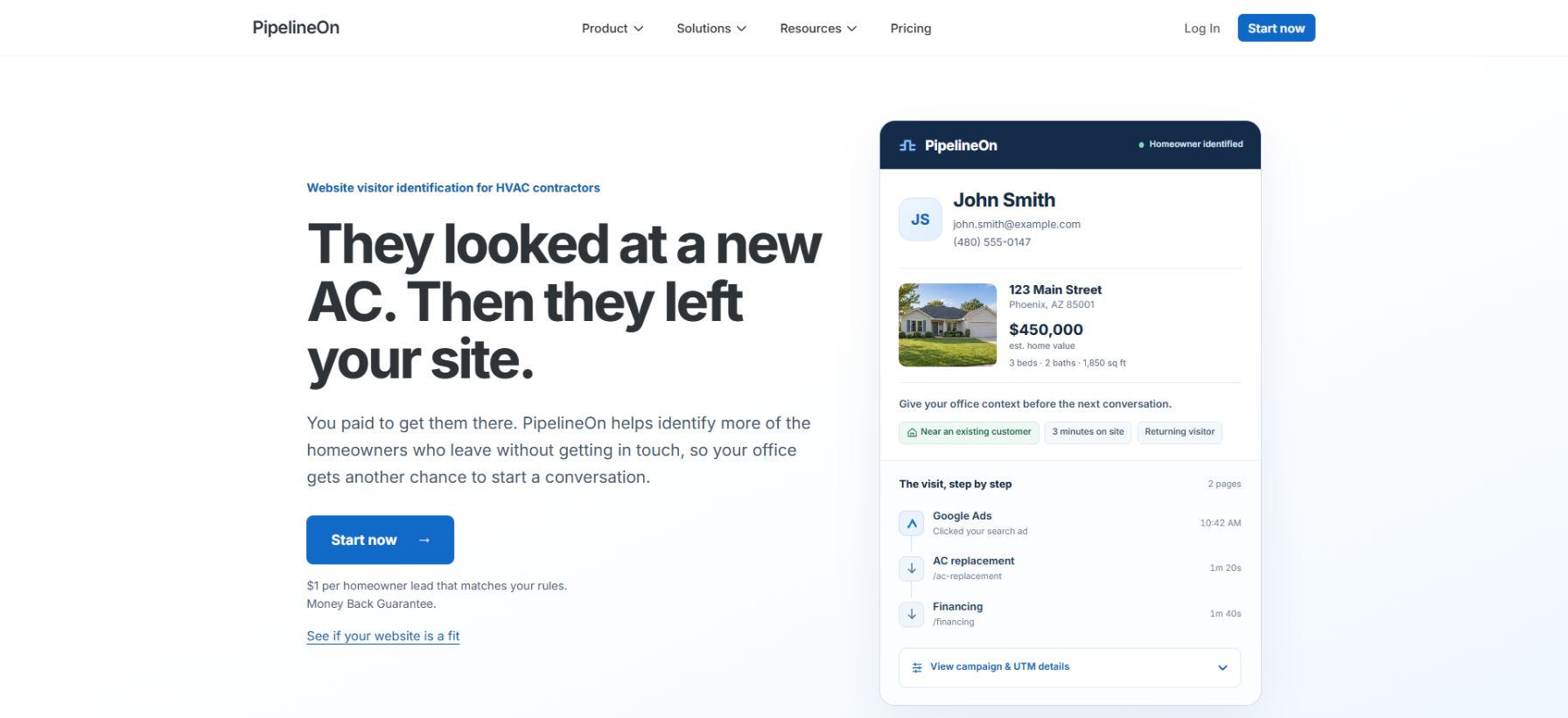
PipelineOn’s public demo record shows where the visit came from and which pages were viewed. Source -
Assign a concrete next conversation Name the estimatorPut the missing decision in the task
Give ready requests an owner and an approved callback window. Ask unresolved cases the question needed to assess fit.
Record why a request was prioritized and let a reviewer handle uncertain associations.
-
Audit whether priority improved use of time Log reached customersRecord quote-ready visits
Compare assigned requests with actual scope conversations and attended estimates. Keep no reply distinct from unsuitable work.
Adjust the readiness rule when it repeatedly overlooks useful projects or creates duplicate callbacks.
What to measure
Priority should follow confirmed readiness and the work your estimator can advance.