Route existing restoration customers to the right project team
Someone who already has an open drying job may find the same quote form as a first-time customer. Give them a place to get an update, ask about a document or report a new incident. Your project coordinator can then respond without handing the customer to a new salesperson.
Steps
-
Give existing customers one recognizable website path Link it from project confirmationsOffer billing, job update and new incident choicesShow your actual urgent contact route
Add a page named Get help with an existing job. Link it from the confirmations you already send. Explain which team handles an invoice or document question, an update on work in progress and a report of a new incident.
Use the urgent phone route your office actually staffs. Direct customers reporting new damage to that path when appropriate. Keep normal response windows visible for administrative questions.
-
Collect enough to find the earlier project Ask for the service address and callbackMake the job reference optionalTest contact mapping on an existing record
In the form, ask for service address, contact details and a job reference if the customer has it. Let them choose one of the three reasons or select unsure. Avoid requesting invoices, payment details or insurance paperwork through the general intake.
In HubSpot, make the routing reason and service address required if your team needs both to assign the case. Test using a staff-controlled contact with two projects and confirm that a form update does not overwrite the permanent address or change the wrong project.
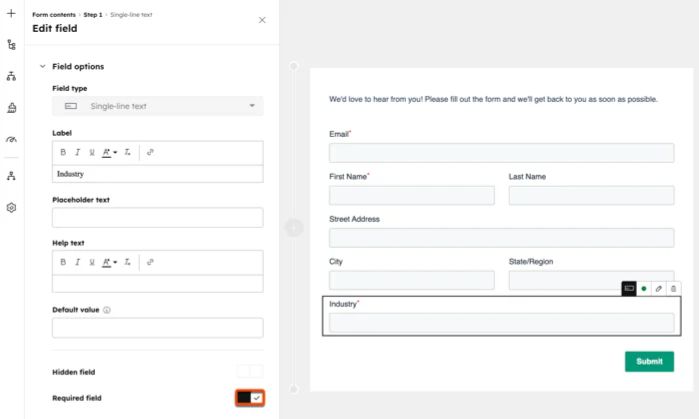
HubSpot’s form editor shows the Required field control for a form field. Source -
Assign the request without resetting the loss record Check the property and job referenceGive each request a named ownerConfirm where a newly reported incident belongs
Have the coordinator verify the property and reference against the current project. Direct project updates to the current project manager and invoice requests to the billing owner. Record the incoming question with its original date and channel.
Send a newly reported incident through staffed intake and let the project lead decide how to record it. Keep the prior job intact. A returning website match can add context after review, while the customer's report determines the immediate response.
When PipelineOn shows available activity on the existing-job page and the record can be verified, use it to surface an open case for internal review. Keep incident assignment with the staffed team and the details the customer provides.
-
Test all three routes with one existing customer Test a document question and an active-job updateTest a new report at the same addressWatch for reassigned inquiries and duplicates
Use a staff-controlled test record for each reason. Inspect the owning team, confirmation message and linked job. Include a conflicting job reference and confirm that someone is assigned to resolve it instead of routing it into the sales queue.
Measure time to the correct owner, responses within your stated window and duplicate sales records created from existing jobs. Review new loss reports with dispatch separately.
What to measure
A returning customer should hear from the person who can answer their question. Use misrouted requests to improve the form labels and office assignment rules.