Route a reported sump-pump failure into an owned professional review
A homeowner reports that a sump pump stopped working. Your office needs accurate facts and a tested response route before it can make a service commitment.
Steps
-
Record what the caller reports Collect address and safe callback detailsUse the approved urgent-response wording
Ask what the customer has observed and when it began. Record their words without diagnosing the equipment or directing them into wet or unsafe areas.
Follow your established escalation protocol for reported urgent conditions. Clearly state whether the office is arranging a callback, reviewing dispatch or confirming a visit.
-
Verify the receiving queue Use the actual public phone pathTest an unanswered office call
HighLevel documents how routing, timeout and backup destinations shape inbound call handling. Review the number your sump-pump page actually displays.
The shared voice example is configuration context. Place a marked staff test call and confirm the request reaches the person designated to review availability.
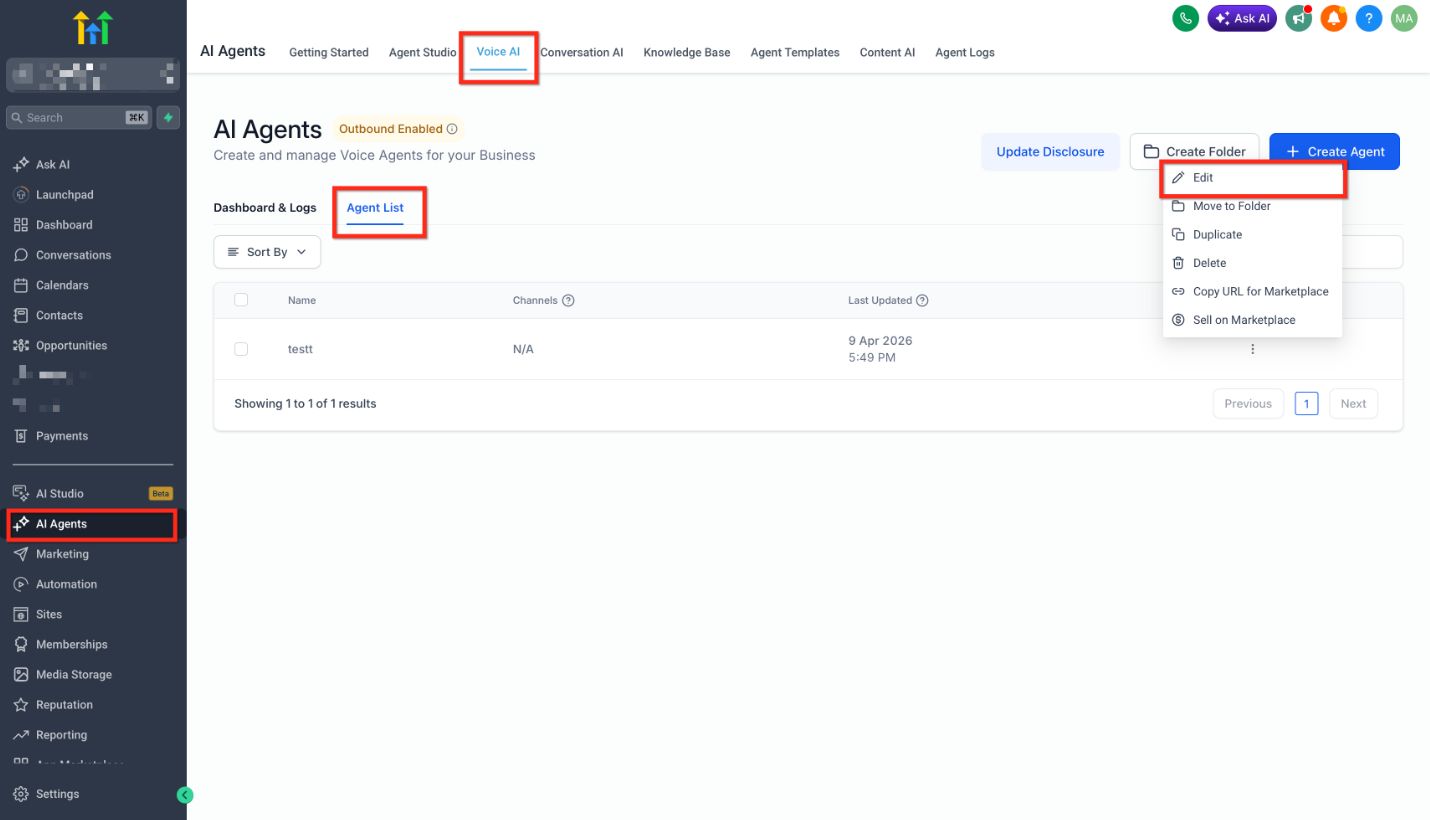
HighLevel’s public example of the Voice AI settings and action menu. Source -
Confirm capability and capacity Check the service your team offersRead back the next action
Have the responsible dispatcher verify coverage, equipment scope and available response. Preserve an existing installation reference where relevant.
Tell the customer exactly what the office has confirmed. Avoid declaring repair feasibility or arrival timing before the responsible person accepts it.
-
Review the handoff outcome Track acknowledged urgent requestsAudit unsupported promises
Check test records for correct address, reported condition and assigned owner. Repeat after an on-call staffing change.
Measure unanswered handoffs and promises the dispatcher later had to correct. Fix the call path or script responsible for those errors.
What to measure
The intake should end with a real owner and an accurate next step. Technical assessment stays with the qualified plumbing team.