Keep masonry bid alternates tied to the architect’s current issue
A tender asking for base work and alternates needs a clear drawing issue and scope owner before the office returns a price.
Steps
-
Collect the actual bid instructions Record the drawing issueIdentify base and alternate requests
Ask the authorized contact for the current package and submission requirements. Keep superseded issues identifiable.
Have the estimator list questions about what each alternate includes rather than assuming all options share one scope.
-
Find the bid opportunity Choose its pipelineCheck the current document owner
Use Pipedrive’s selector to locate the masonry bid and read its latest attachments and owner notes.
Confirm addenda through the owning project source. A saved CRM attachment may be an older issue.
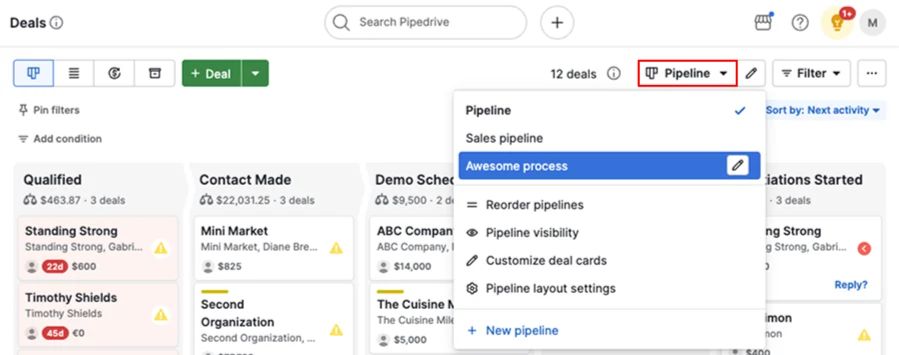
Pipedrive’s sample deal board shows the pipeline selector. Open the pipeline that contains the original proposal. Source -
Assign the scope clarification Send one question listRecord the authorized answer
Have the estimator reconcile base quantities and alternates with the project contact’s actual response.
Return a proposal identifying the reviewed issue and what is included in each priced option through the company’s bid process.
-
Check the awarded scope Record the option selectedPreserve later changes
Compare the award or customer instruction with the priced alternatives before production handoff.
Track estimate rework caused by stale drawings or unclear option boundaries and improve document intake.
What to measure
Every price should identify the drawing issue and option it covers.