Route kitchen refresh and layout-change inquiries to the right consultation
A homeowner asking for a new kitchen might mean painted doors or a different room layout. Ask about the changes they want before giving them a consultation slot. Your designer needs the actual goals and the questions that remain open.
Steps
-
Describe the project types your company actually accepts State which refresh and remodeling scopes you handle.Give each inquiry a clear first appointment.
Have your design lead define the work your company will review, such as cabinet refresh, cabinet replacement or a larger remodel. Explain what the first appointment includes and any actual consultation terms. Use completed project examples your company has permission to show.
Keep the page's offer consistent with the ad, showroom handout or referral that brings the homeowner in. A finish-only image should not be the sole explanation for a consultation built around changing the room. Give the customer room to describe a project outside your suggested categories.
-
Collect priorities before asking the homeowner to classify the job Ask what should stay and what should change.Make uncertain layout and appliance answers usable.
In HubSpot's form editor, collect contact details, service address and the homeowner's main goals. Ask whether they expect cabinets, appliances or fixtures to stay where they are, with an unsure answer. Invite a short description of the current problem and desired timing.
Review which CRM properties each field updates and preserve the accepted submission with the project. The screenshot shows the field editor and required-field control. Require only the answers your office needs to arrange a useful first conversation. A homeowner should not have to invent a design specification to submit.
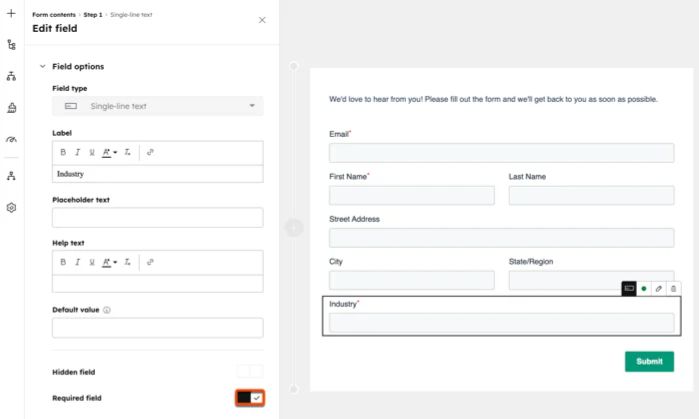
HubSpot’s form editor shows the Required field control for a form field. Source -
Let the designer confirm the consultation route Review the submitted goals and current project record.Assign the staff member who can resolve the open questions.
Have a reviewer read the actual submission before assigning a category. Check existing conversations and proposals for the property. Give a refresh request to the team that handles that work, and send unresolved layout questions to your designer under the process your company uses.
Confirm the appointment purpose, participants and access with the homeowner. Keep technical investigation and final scope with the qualified project team. A form answer about moving an appliance cannot establish the hidden work or final price.
-
Test unclear requests and record routing corrections Submit a refresh, a layout change and an unsure request.Measure consultations that produced a usable scope decision.
Run three labeled tests through the published page. Check office delivery, contact association, owner and the appointment message. An unsure answer should reach human review. Check that two submissions about the same project do not create competing consultation tasks.
Record attended consultations, scope decisions and proposals by the confirmed project type. If PipelineOn is live, available page activity can add checked context to some homeowner records. It does not decide the remodeling category. Use the homeowner's goals and designer's review to correct the route.
What to measure
Review the consultations your designer had to reroute and the questions that caused the confusion. Change the intake when a clearer answer would have placed the homeowner with the right person sooner.