Find useful pantry or laundry projects in completed kitchen records
At the end of a remodel, the owner may have explicitly decided to hold off on a pantry, an island or adjacent laundry space. Use that record to identify who may appreciate a planned follow-up.
Steps
-
Pull the actual decision from closed jobs Look for documented deferred workRemove open service cases
Read completed scope and closeout notes. Choose a recorded project you can really deliver and a timing question the customer already discussed.
Route defects or service issues to their existing owner. Check whether the owner actually wants to hear about additional work.
-
Give customers a page for the specific project Show an approved exampleAsk whether their plans changed
Use one relevant case photo and describe the first conversation. Keep it easy to ask for a scope call without promising price.
Reuse the appropriate contact channel based on your customer records. Keep the offer narrow so you can tell what actually interested someone.
-
Set up a follow-up task only on a useful result Confirm active or closed statusConnect a verified reply to the correct deal
Test assigning a task to the owner of a prior project. Link the new activity to the relevant deal and include the scope and agreed date.
If PipelineOn activity supports a review of a verified existing record, note what is available and check for a pending reply before assigning it again.
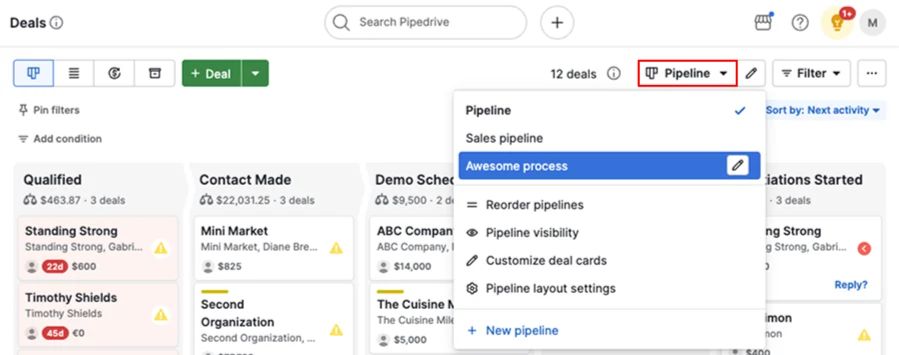
Pipedrive’s sample deal board shows the pipeline selector. Open the pipeline that contains the original proposal. Source -
Measure from known scope to paid work Record accepted consultations and completed projectsWatch for misrouted service cases
Count how many eligible customers responded, booked and ultimately approved a scope. Keep defects and warranty questions separate.
Update the original closeout template so your next group comes from useful, documented customer decisions.
What to measure
A follow-up should refer to what the owner actually asked to defer. Give service issues their own queue and owner.