Set a kitchen Search ad budget from paid design and construction outcomes
A campaign can produce paid design appointments without producing enough construction work. Include the cost of consultations and design before deciding a search campaign is worth scaling.
Steps
-
Choose one kitchen project cohort Separate full layout changes from refreshesAssign the right sales-cycle window
Pull requests from one channel and service period. Define qualification using your actual service, territory and project scope.
Allow enough time for initial calls, design agreements and signed construction scopes. Confirm those dates from office records.
-
Keep paid results and site behavior separate Pull actual ad costsCheck the funnel’s final event against intake
Use your actual Search campaign charges and accepted records. In PostHog, build a funnel from the landing page through quote start to accepted request if those events are available.
Check the accepted event against the office inbox or CRM. Use page behavior for friction questions and deal outcomes to calculate return.
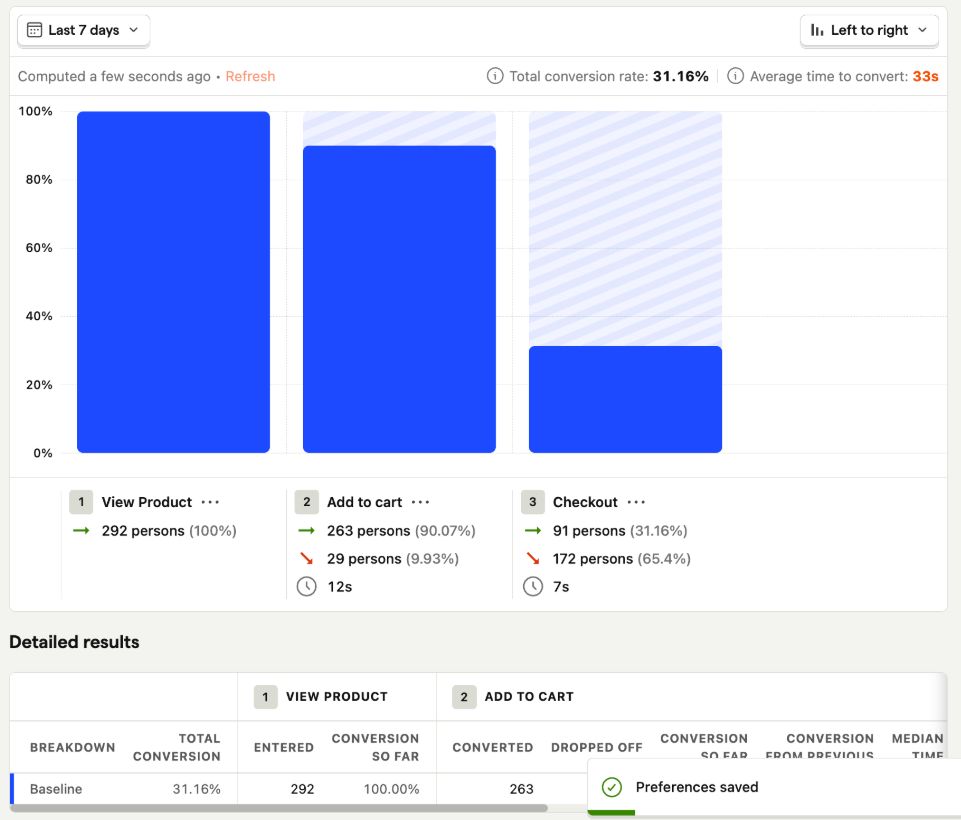
PostHog’s sample funnel. Substitute your page visit, form open and accepted request. Source -
Calculate what attended consultation time costs Include internal design hoursAdd actual ad spend
In a hypothetical cohort, $1,000 of ad spend and ten $80 consultation hours across five attended meetings gives $360 per attended consultation. Track design fees received separately.
Compare that with projects won and observed contribution after the costs of completing the work. Check which costs the estimate already includes before adding numbers.
-
Decide which lead handling change comes first Separate submitted requests and eligibilityCheck capacity for more consultations
When PipelineOn provides an eligible match, compare actual scope and open records before creating follow-up. Keep matched activity separate from the paid accepted inquiry count.
Increase spend only when the calendar and job economics justify it. If they do not, correct qualification or follow-up and review another cohort.
What to measure
A dashboard count is only useful when the office can connect it to a verified appointment and the work your team actually sells.