Route garage door requests outside your service territory
Your office can spend time calling back a garage door request before discovering the property is outside the route. Ask for the service location early, then make every outcome clear. A useful territory form also handles boundary streets and missing addresses without promising a visit.
Steps
-
Write the coverage rules with your dispatcher Separate repair and replacement coverageList boundary exceptionsChoose an owner for uncertain addresses
Use the territory your crews actually cover today. Repairs, replacements and after-hours work may have different boundaries. Have the dispatcher approve a written list and note where a ZIP includes streets your crew cannot reasonably reach.
Use the customer's service address for the request. Their phone area code, device location or mailing address can describe a different place. Give uncertain addresses a review route with a realistic callback time.
-
Build the form around the requested property Collect service address and job typeKeep unknown details acceptableShow the next step before submission
In HubSpot, create a service form with address, ZIP, repair or replacement, contact details and a short description. HubSpot forms can create or update CRM records. Check your plan's available logic before deciding whether to branch within the form or in the office workflow.
The shared HubSpot screenshot shows its form editor. Configure and test your own fields. Explain that submission starts a coverage review and that the office confirms availability. Provide a phone route for caller-reported urgent issues using your actual staffed process.
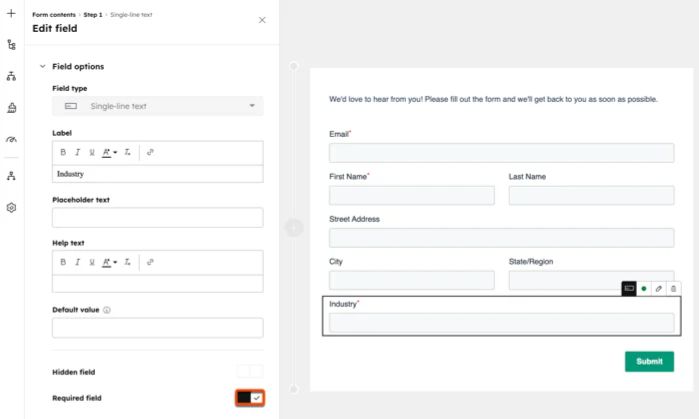
HubSpot’s form editor shows the Required field control for a form field. Source -
Give each territory outcome a separate route Send covered requests to dispatchHold boundary cases for reviewClearly acknowledge declined coverage
Send confirmed covered addresses to the appropriate office queue. Put missing addresses and boundary cases in a review queue with one owner. Avoid letting an uncertain ZIP book a technician automatically.
For out-of-area requests, state that your company cannot schedule that location. Offer a verified alternate provider only when you have checked current coverage and the customer wants the information. Obtain permission before sharing their details. Keep a coverage decline distinct from a booked or qualified job.
-
Run four service-address tests Test covered and excluded addressesInclude a boundary and missing ZIPInspect the CRM record and message
Use staff-controlled records for an in-area address, an excluded address, a boundary street and a missing ZIP. Inspect the submitted fields, assigned owner, customer message and appointment behavior. Check that an existing customer submitting again receives the correct project route.
Review coverage declines, uncertain requests, confirmed bookings and completed jobs each week. If the same excluded area keeps appearing, inspect the source campaign and page wording. Change targeting or copy after verifying the cause.
What to measure
Keep the approved territory list beside the form test results. Recheck both whenever a crew, service type or coverage area changes.