Match flooring ads to the room and service the customer sees
An ad about replacing bedroom carpet can lead to a form built for whole-house hard flooring. Review that mismatch before buying more visits. Your estimator needs the room, requested outcome and actual property.
Steps
-
Choose the actual advertised project Use permitted room-specific job proofConfirm supported materials and territory
Have the lead approve the service, example and first appointment. Distinguish installation, refinishing and repair when their processes differ.
Avoid promising a material or final price before review. State real measure terms and who responds.
-
Compare the page with the campaign Make the pictured service requestableKeep other scopes on clear routes
Open the real destination on a phone and attempt the advertised request. The customer should not need to claim a larger project.
Google recommends matching ad offers and landing pages. Confirm the page explains the same service and next step.
-
Test acceptance and form friction Allow unknown area and materialInspect office source and owner
Run a controlled single-room and unsure-material request. Verify contact, property, scope and assigned estimator.
The shared PostHog image is a sample funnel. Build your own start-to-accepted-request flow and reconcile it with office delivery, without personal form content.
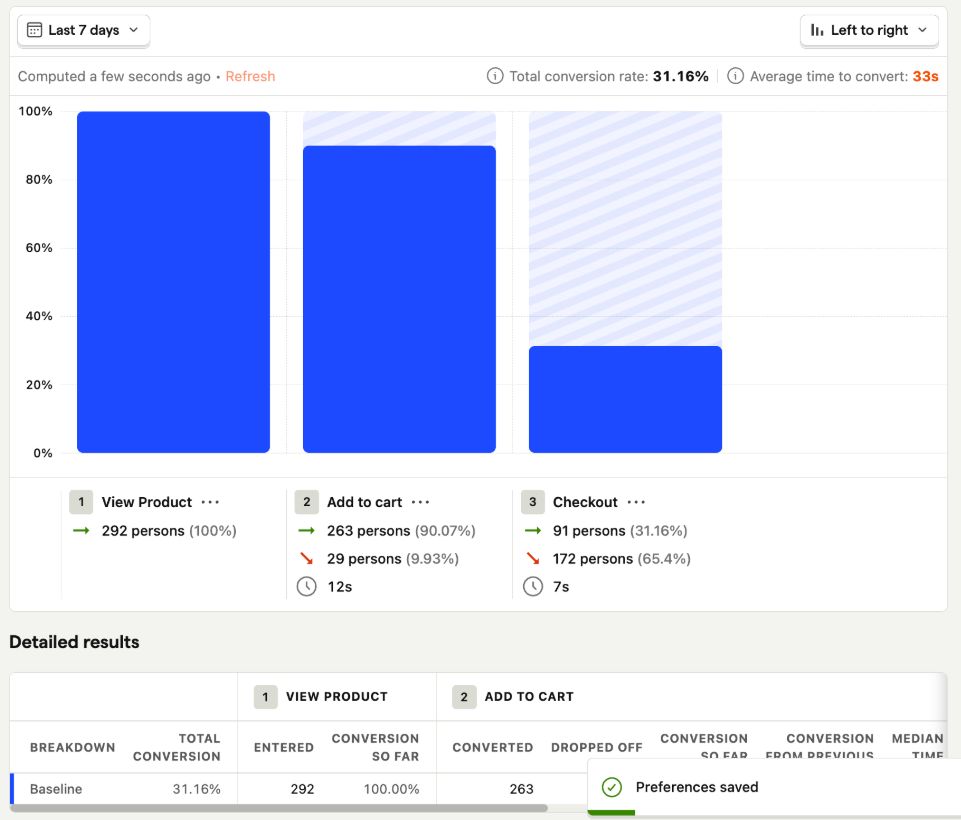
PostHog’s sample funnel. Substitute your page visit, form open and accepted request. Source -
Review actual scope and completion Track attended measures and installed workRecord requests the estimator reroutes
Follow serviceable requests through assessment, proposal and completed installation. Keep repeated calls on one project together.
Review unavailable materials, unclear fees and unsuitable scopes before changing spend. Improve the specific promise or question causing repeated mismatches.
What to measure
Test the small project the creative actually shows. A useful handoff starts with the customer's genuine scope and a workable appointment.