Set flooring Search limits by installed job category
A wood installation and a carpet replacement can leave different contribution after direct costs. Keep them distinguishable in your campaign cohort. Use actual collected work before setting an advertising allowance.
Steps
-
Define the service and outcome cohort Choose one campaign and intake periodSeparate relevant flooring categories
Track unique inquiries, qualified measures, proposals and completed paid projects. Preserve cancellations and unresolved work.
Keep material category and assessed preparation scope with each job. Do not count every sample request as a qualified measure.
-
Reconcile actual campaign evidence Export spend and clicksVerify the property and source connection
Google defines average CPC as click cost divided by clicks. Save the actual report settings and keep forecast bids separate.
The shared CallRail image is an example. Inspect real source evidence before attributing a flooring job, with weak joins unresolved.
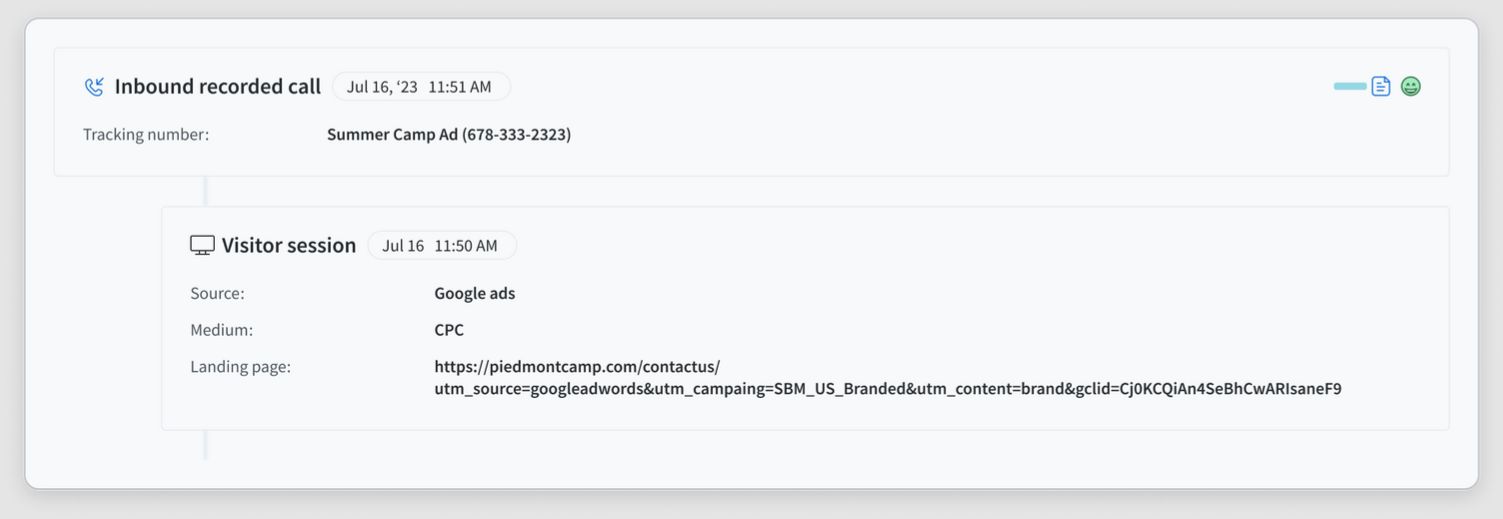
CallRail’s example of the visitor session attached to a tracked call. Source -
Calculate pre-ad contribution Include waste and preparation costsCount collected revenue once
Subtract actual materials, waste, installation, removal, disposal, travel and attributable sales effort from collected cohort revenue.
Include unsuccessful measure costs. Divide by unique inquiries for a planning contribution per inquiry, then reserve overhead and profit before choosing advertising spend.
-
Review category outcomes and constraints Show attended and completed countsLeave zero unit costs unresolved
Report spend per qualified request, attended measure and completed job. Keep category differences visible when they change the decision.
Review unavailable products, unaccepted preparation scope and crew capacity. Fix the limiting stage before expanding demand.
What to measure
Keep campaign exports and job-cost records together. Revisit the acquisition allowance after product mix, preparation effort or completed outcomes change.