Separate repeated drain calls from a genuinely new service episode
A second call can update an unresolved blockage or describe a new problem after completed work. Your office needs the episode history before creating another job. Keep camera reports attached to the event and property they actually document.
Steps
-
Collect the relationship to prior service Confirm property and reported issue dateAsk for an existing job reference
Record actual service address, unit, affected area as reported and whether work was previously performed. Let the customer explain uncertainty.
Check the completed and open job history before deciding the request is a duplicate. A matching caller number cannot distinguish units, properties or incidents.
-
Review the actual project records Compare scope, report and current statusKeep separate episodes intact
In Pipedrive, inspect the correct pipeline and linked opportunity. The shared screenshot shows pipeline selection, with no evidence of a drain-specific episode match.
Use Pipedrive's merging controls only after the CRM owner compares the underlying records. Keep later confirmed incidents or different scope separate while removing equivalent duplicate tasks.
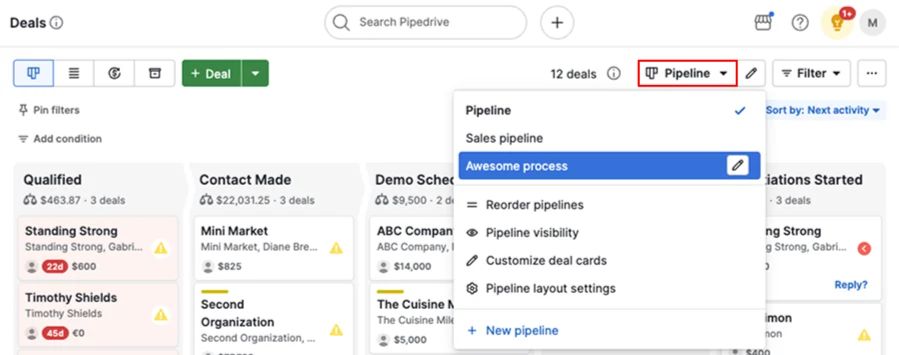
Pipedrive’s sample deal board shows the pipeline selector. Open the pipeline that contains the original proposal. Source -
Preserve report versions and one owner Link each report to its actual serviceRecord the new request in the customer's words
Keep inspection date, property and report reference together. Avoid treating an older report as a current assessment of another issue.
Assign one responsible owner to the confirmed episode. Give uncertain history a manual-review task and keep technical interpretation with the drain lead.
-
Test unresolved repeats and later incidents Use the same contact for contrasting casesInspect ownership and work-order counts
Run controlled cases for a repeat unresolved request, a different unit and a new issue after completed service. Have dispatch identify each intended record.
Track duplicate visits, incorrect report attachments and lost episode history. Rerun the cases after imports or job-creation changes.
What to measure
Keep the episode rules beside intake. A clean customer record should preserve the service history needed to route the next actual request.