Connect Maps visitors to the window service your company actually offers
Maps visitors may want a casement repair or a whole-home replacement. Give them an accurate site destination. Your office should receive the requested service and the property your team can assess.
Steps
-
Audit the actual Business Profile destination Check hours, services and territoryOpen the live website link
Google requires accurate business representation and precise service-area information. Compare the profile with your current coverage and offered services.
Check that the website link reaches a useful service page rather than an unrelated promotion. Keep unavailable repair services out of the claim.
-
Publish useful permitted job evidence Describe actual installed scopeLink to the appropriate request
Have your estimator verify project descriptions, materials and locations you can publish. Obtain permission for images and identifying details.
Explain the assessment and any fee. Keep technical suitability and concealed frame work for qualified review.
-
Test the page and office record Allow unsure opening countsVerify source and request owner
Use HubSpot fields for contact, property and actual requested scope. Require only the information needed for a useful callback.
The shared editor image shows the Required control. Test a repair question and replacement request and inspect their assigned owners.
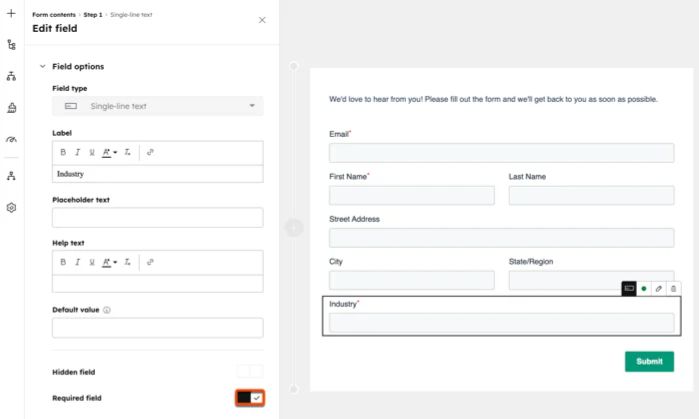
HubSpot’s form editor shows the Required field control for a form field. Source -
Review actual service outcomes Track qualified measures and completed jobsRecord unsupported-request reasons
Measure accepted inquiries, attended reviews, proposals and installations. Preserve Maps as a source when later calls arrive.
Use repeated mismatches to improve profile wording or site navigation. Avoid claiming a page edit alone caused every later project.
What to measure
Test the journey from the live profile link. The page should offer the same service your office and estimator can actually deliver.