Route existing solar-system questions from a new property owner
Someone buying a home with solar may contact your installation sales form about equipment already on the roof. Give that customer a separate request path. Your office needs to identify the system and service relationship before assigning sales, support or warranty review.
Steps
-
Distinguish an existing system from a new installation Offer a clear existing-system optionExplain supported service workAvoid promising warranty coverage
On the relevant site page, separate a new installation consultation from service for an existing system. Explain which systems or services your company supports. Give an accurate callback expectation and a staffed route for reported urgent conditions.
DOE's guide for buying a house with solar recommends collecting information about the system and its history. Your intake can help locate that information. It cannot establish ownership of equipment, contract obligations or warranty coverage from a page visit.
-
Collect only the information needed for service review Ask for service address and contactMake installer and model details optionalCapture the reported concern
Ask for property address, contact role, general concern, installer if known and an optional prior job reference. Let unknown equipment details remain unknown. Keep sensitive account documents out of the general marketing form.
HubSpot forms can create or update CRM records. The shared form-editor screenshot shows the field configuration context. Test the existing-system choice and ensure the resulting record receives the correct request type.
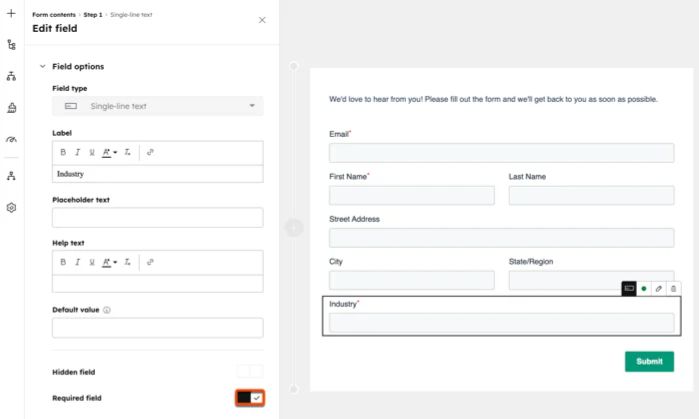
HubSpot’s form editor shows the Required field control for a form field. Source -
Verify the system relationship and responsible team Check the property and prior installationReview open cases and actual termsHold uncertain matches for review
Have the service coordinator search available installation and customer records. Verify the property and contact relationship before attaching old records or sharing information. A new owner and former owner may need separate contact records linked to the same system.
Check the actual agreement and supported equipment before promising service or coverage. Send unsupported systems to an accurate next-step explanation. Obtain permission before sharing the customer's information with an alternate provider.
Review eligible PipelineOn context only after checking the new customer’s direct service request. An earlier match at the same address may belong to a former customer. Use the homeowner’s confirmed service details to open the right current case.
-
Track service resolution separately from installation leads Name the case ownerRecord the agreed next actionKeep sales reports accurate
Tell the customer who is reviewing the case and what information remains necessary. Record the service appointment, referral or final explanation. Preserve the source and request history without generating a new installation opportunity automatically.
Track service requests, verified system matches, completed reviews and completed service work. Keep new installation consultations separate. Review duplicate cases and misrouted sales callbacks to improve the site's first question.
What to measure
Test the existing-system route with a known property and an unknown installer. Both should reach a named review process with an accurate customer expectation.