Prepare occupied-home repipe requests for a detailed survey
A whole-home repipe can affect the rooms and routines people use every day. Your office should capture those constraints before a detailed survey. Give the plumbing lead the customer's goals and unresolved questions without promising the duration or finished scope online.
Steps
-
Explain the survey and the information it needs Define your actual repipe assessmentMake occupancy and access questions visible
Create a page explaining the first survey, territory, response hours and any fee. Ask your project lead which occupancy and access details help arrange that visit. Keep leak reports requiring dispatch on your staffed service route.
Describe how the team reviews proposed work and restoration responsibilities. Avoid a universal completion timeline or scope from a fixture count alone. Qualified staff determine the actual project after assessment.
-
Collect an honest property discovery request Ask which spaces remain occupiedRecord fixture count source and uncertainty
Collect contact details, service address, authorized decision-maker, occupancy needs, approximate fixtures and known access limits. Let the customer say the count or construction details are unknown.
Use a neutral page label in Tally hidden fields if applicable. The shared screenshot shows that source mechanism. Test an unknown-count request and verify the project lead receives occupancy, access and source together.
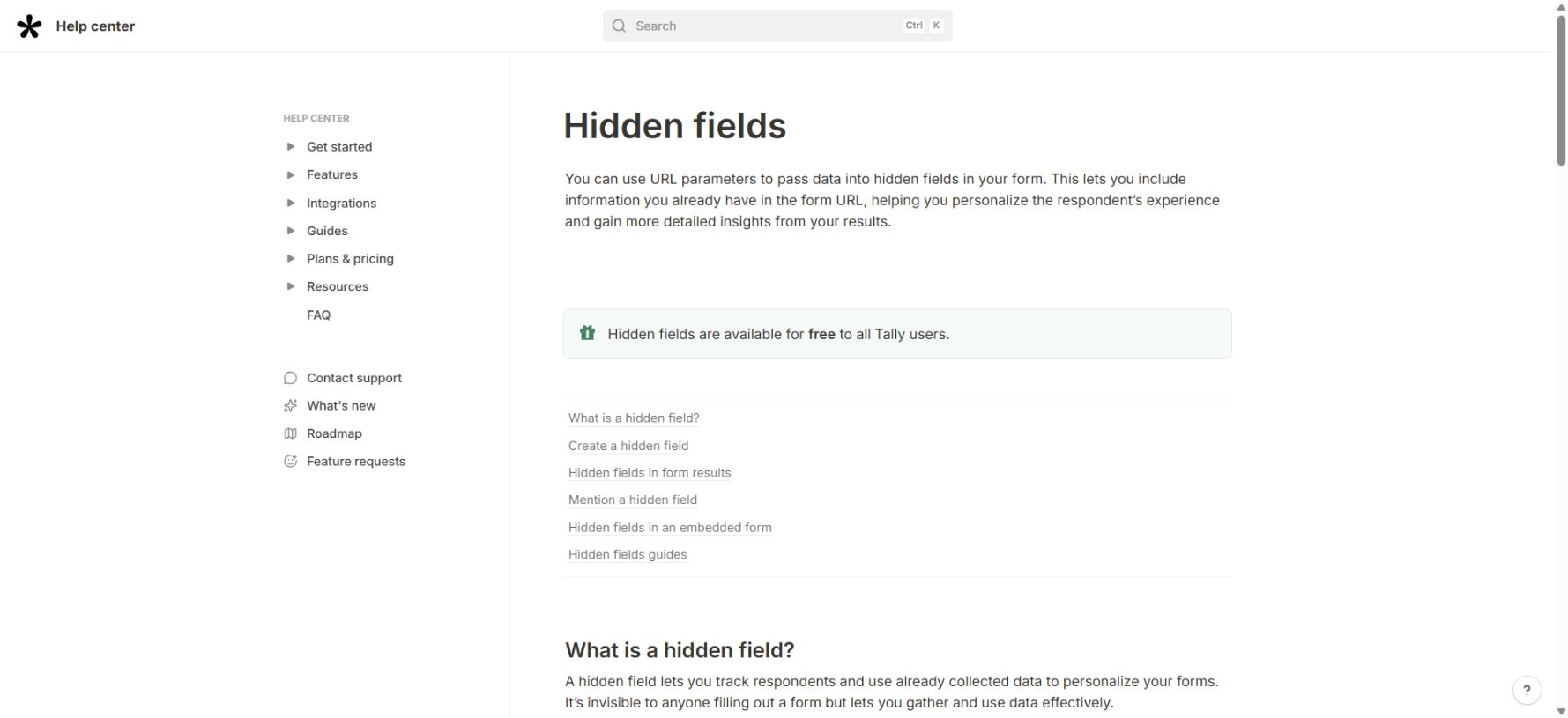
Tally’s public documentation shows how to carry a campaign label into a submitted form. Source -
Have the project lead accept the survey Check earlier estimates and separate propertiesList technical and restoration questions
Check the CRM for an existing repipe proposal and confirm whether the request concerns that same property. Give the lead the current goals, known history and person who can arrange access.
Have qualified staff determine the site investigation and coordination required. Record restoration, access and scheduling questions that must be resolved before a proposal. Keep the customer's requested timing separate from a committed work window.
-
Verify the proposal and handoff to the crew Preserve assessed scope and approved termsMeasure attended surveys and completed work
After the survey, confirm the proposed scope, responsibilities and agreed customer arrangements through your normal approval process. Make the current plan available to the crew and preserve any later change decisions.
Track submitted requests, accepted surveys, attended visits, proposals and completed projects. Review delays caused by missing occupancy or restoration information. Improve intake using those actual cases rather than adding technical questions homeowners cannot answer.
What to measure
Test the discovery handoff with an occupied home and uncertain fixture count. The project lead should receive enough context to arrange the survey and identify the remaining questions.