Price slab-leak Search inquiries through diagnosis and completed repair
A suspected slab-leak inquiry may lead to paid diagnosis, a different finding or an approved repair. Track those outcomes separately before deciding what the Search campaign can cost. Your own collected revenue and service costs supply the planning inputs.
Steps
-
Define the diagnostic service and outcome cohort Use the assessment your team actually offersKeep reported symptoms separate from diagnosis
Have your plumbing lead define service territory, diagnostic scope, fee and the requests your team accepts. Confirm the phone and website route for reported urgent conditions. A search term cannot establish an actual slab leak.
Select one campaign cohort and reporting period. Track unique inquiries through qualified requests, completed diagnostics, professional findings, approved repairs and paid completion. Keep open repairs visible until the outcome matures.
-
Use actual campaign costs and verified sources Export spend and clicks for the cohortReconcile the call or submission source
Google defines average CPC as click cost divided by clicks. Use actual campaign spend for acquisition calculations, with historical bids kept as separate planning context. Save the campaign and date settings.
If using CallRail, inspect the actual caller timeline for available source and page evidence. The shared screenshot shows its documentation example. Save the call reference on intake and leave uncertain source connections unassigned.
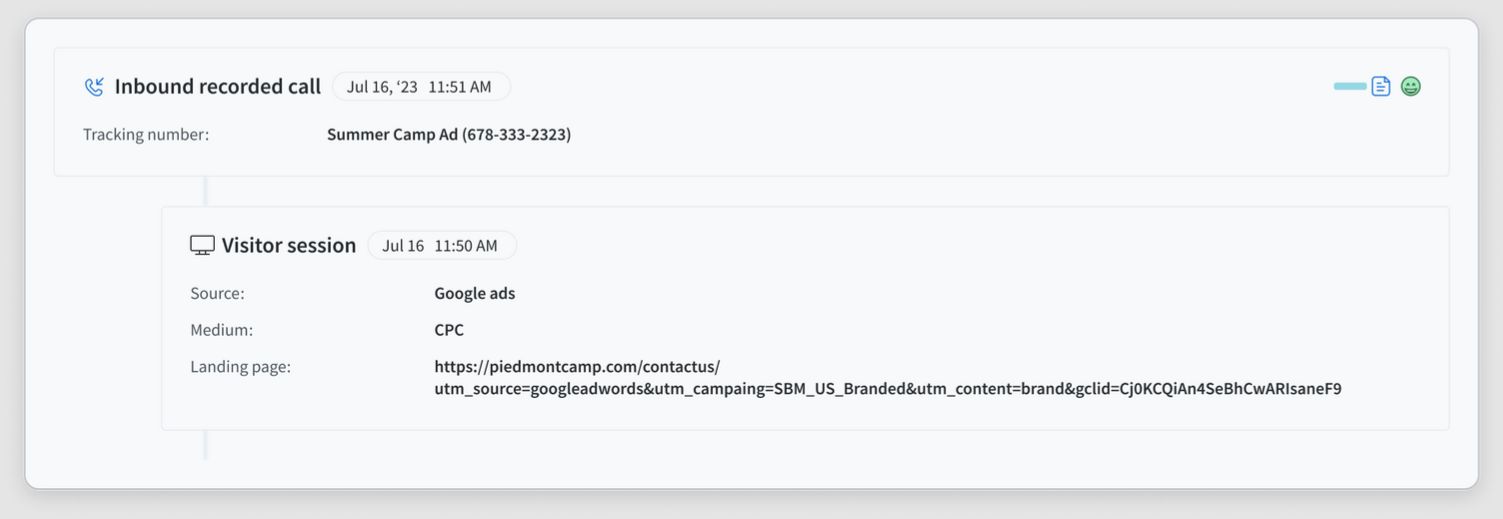
CallRail’s example of the visitor session attached to a tracked call. Source -
Calculate contribution across the diagnostic pathway Include diagnostic and unsuccessful-visit costsAvoid counting repair revenue twice
For the mature cohort, total collected diagnostic and repair revenue without double counting any credited diagnostic fee. Subtract technician time, travel, materials, subcontract work and other direct costs, including visits that did not produce a repair.
Divide that pre-ad contribution by unique inquiries to estimate contribution per inquiry. Decide how much must remain for overhead and profit before choosing an advertising ceiling. Keep diagnostic cost per completion and repair acquisition cost visible as separate measures.
-
Compare spend with outcomes your office can verify Include unserviceable requests and repeats accuratelyChange the campaign after checking the bottleneck
Report spend per accepted request, completed diagnostic and completed repair using the correct count for each. If no repair has completed, report the count and leave repair acquisition cost unresolved. Keep repeated calls on the same incident together.
Review outside-area calls, missed intake, diagnostic availability and repair approvals. Fix the stage causing the loss before raising spend. A positive click trend cannot establish that the campaign produced profitable completed plumbing work.
What to measure
Keep campaign exports and the reconciled job-cost cohort together. Revisit the ceiling when the diagnostic offer, costs or repair outcomes change.