Qualify a commercial restroom plumbing RFQ before committing an estimator
An emailed restroom renovation request may arrive with a deadline but little usable scope. Build an intake brief your estimating lead can accept or decline.
Steps
-
Capture the procurement request Record site and bid deadlineIdentify the actual contracting party
Ask who is requesting the proposal, who approves scope and whether a general contractor is coordinating the work.
Record occupancy, number of affected areas and available plans without asking reception to judge code compliance or installation feasibility.
-
Preserve the submission source Use a dedicated RFQ form linkKeep sensitive plans out of URL parameters
Tally supports source values through hidden fields. Use a neutral label such as restroom-rfq-email to identify this intake route.
The shared Tally image explains hidden fields. Keep confidential project information in the submitted record or approved document channel, not a shareable URL.
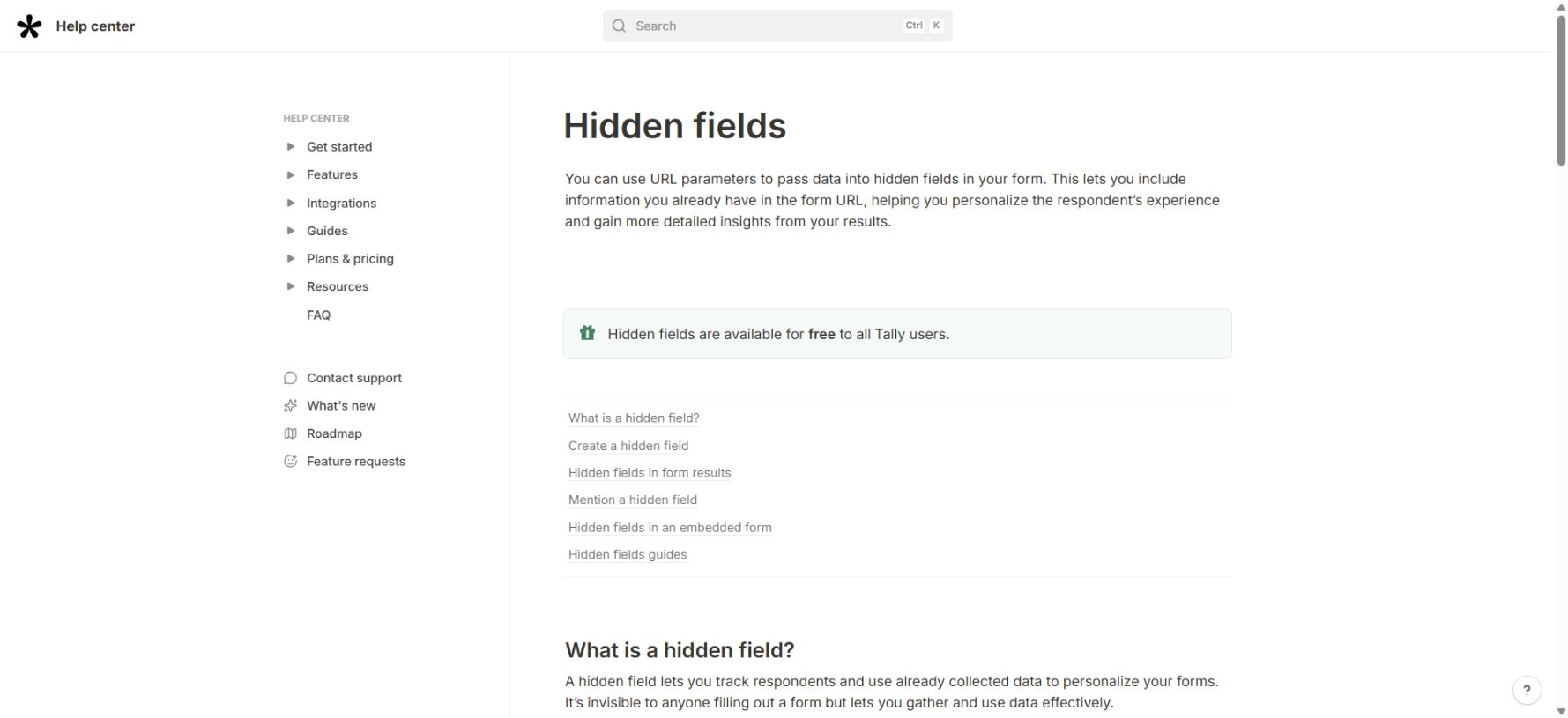
Tally’s public documentation shows how to carry a campaign label into a submitted form. Source -
Have estimating accept the next step Review the available documentsConfirm site-visit and proposal commitments
Send the brief to the commercial estimating lead with the deadline and missing information. Let that person confirm whether the team can bid.
Tell the requester what your team has accepted, such as a document review or site survey. Avoid implying the bid deadline is committed merely because a form arrived.
-
Track a concrete procurement outcome Record accepted, declined or awaiting scopeMeasure avoidable estimator trips
Assign a due action for each missing plan or access question. Preserve the reason for a declined request.
Review how many site visits lacked an approver or useful scope. Improve the RFQ intake around those failures rather than adding every possible field.
What to measure
Return a clear acceptance, clarification request or decline. A detailed RFQ record should protect both the relationship and estimator time.