Calculate termite-inspection Search limits from actual completed work
A termite inspection can end with a report and no treatment sale. Track the actual pathway before setting an acquisition limit. Your own collected revenue and direct service costs determine the planning allowance.
Steps
-
Define the inquiry cohort Use one campaign and service periodSeparate inspections and treatment outcomes
Record unique property requests, serviceable inquiries, attended inspections, accepted treatment and completed paid work. Preserve unresolved proposals.
Keep transaction-report requests and other pest services identifiable. A keyword or inspection booking does not prove a treatment need.
-
Use actual advertising evidence Export campaign spend and clicksVerify the call-to-project connection
Google defines average CPC as click cost divided by clicks. Use the actual campaign report and keep planning bids separate.
The shared CallRail image is an example. Inspect your actual call and source details before connecting it to the verified property inquiry.
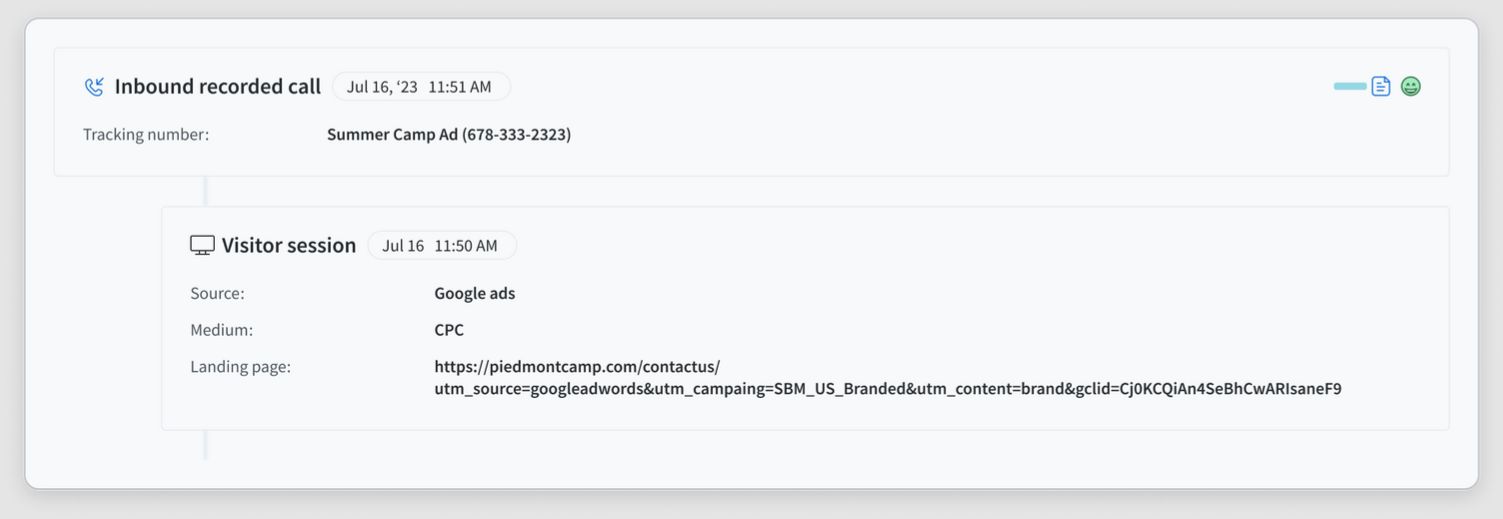
CallRail’s example of the visitor session attached to a tracked call. Source -
Calculate contribution across the service pathway Include unsuccessful inspection effortAvoid counting credited fees twice
Total collected inspection and treatment revenue once. Subtract direct labor, travel, materials, subcontract and other direct costs, including visits without a sale.
Divide pre-ad contribution by unique inquiries. Choose what must remain for overhead and profit before deciding the allowable acquisition spend.
-
Review the actual bottleneck Report costs at each completed stageLeave zero and unresolved outcomes visible
Compare spend per accepted request, attended inspection and completed treatment. Do not invent a treatment acquisition cost when none has completed.
Review response coverage, inspection availability and proposal outcomes. Fix the stage preventing useful work before increasing demand.
What to measure
Save campaign exports with the reconciled service cohort. Revisit the allowance when inspection costs or collected treatment outcomes change.