Match rodent-control ads to a qualified inspection request
A rodent-control ad should lead to an inspection your team actually provides. Keep the customer's observation distinct from a confirmed finding. Test whether a serviceable request reaches the right reviewer.
Steps
-
Approve the advertised service Confirm territory and inspection scopeUse permitted real project proof
Have the service lead approve what the ad can say and what the first visit includes. Keep treatment promises tied to actual accepted scope.
Show accurate examples without implying the reader's property has the same issue. State real response hours and any inspection terms.
-
Match the page to the ad Describe the same inspection offerAllow unknown pest identification
Open the actual ad destination on a phone and compare the offer and first question. Give uncertain observations a route to professional review.
Google recommends matching advertising and landing-page offers. Keep unrelated recurring plans from obscuring the promised inspection.
-
Test request acceptance and friction Inspect the office owner and sourceKeep photos and contact text out of analytics
Submit controlled requests with uncertain identification and without photos. Verify address, observation and requested service arrive intact.
The shared PostHog image is a sample funnel. Build your own accepted-request flow and reconcile its final event with office records.
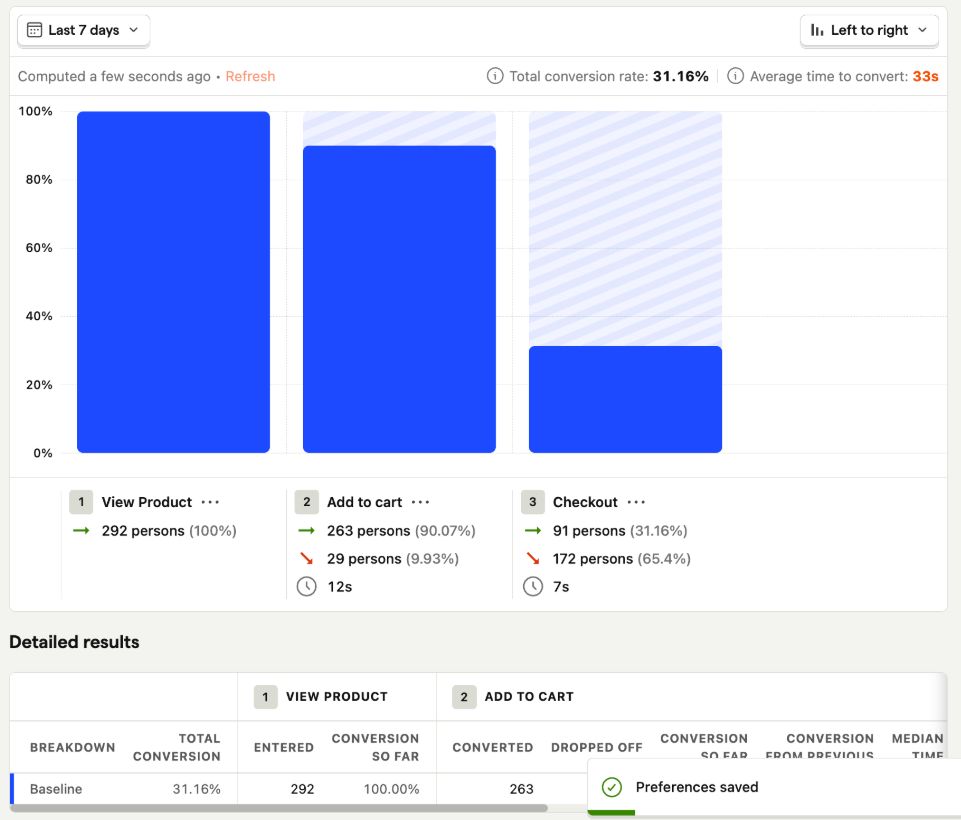
PostHog’s sample funnel. Substitute your page visit, form open and accepted request. Source -
Review inspection and service outcomes Track qualified visits and accepted workRecord mismatched requests
Follow inquiries through attended inspections, reviewed scope and completed service. Keep repeat contacts on the same property episode together.
Ask the lead which requests fitted the offer. Fix recurring ambiguity or unavailable inspection windows before expanding spend.
What to measure
Keep the test request with the campaign. Recheck the promise whenever scope, credentials or response capacity changes.