Hand a rodent-exclusion repair referral to the right scope owner
An inspection identifies a question for a repair partner. Your office should preserve the professional's actual recommendation and help the customer choose the next assessment.
Steps
-
Use the completed inspection record Confirm the professional's recommendationKeep observations distinct from repair scope
Review the report and have the pest professional identify which follow-up is within your company's accepted service.
Do not turn a reported opening or suspected entry route into a guaranteed diagnosis or construction solution at reception.
-
Confirm the customer's requested handoff Ask whether they want the partner contactShare only authorized information
Explain the role of the repair partner and let the customer choose whether to request an introduction.
Use the agreed referral process and limit shared information to what is authorized and necessary. Keep pest and repair commitments separate.
-
Track the referral action Create one owned partner follow-upKeep the inspection reference
Pipedrive activities can be linked to the relevant deal and contacts. Assign an introduction or acknowledgement task with the actual inspection reference.
The shared Pipedrive image illustrates the pipeline context. Verify the real owner and next action rather than assuming an automatic integration.
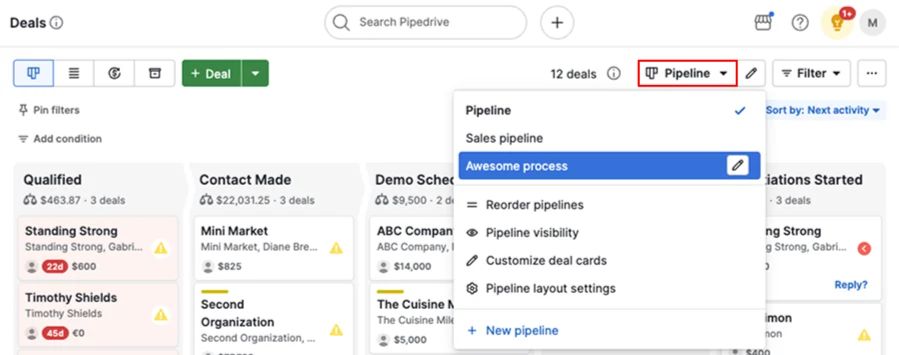
Pipedrive’s sample deal board shows the pipeline selector. Open the pipeline that contains the original proposal. Source -
Close the referral loop Record accepted, declined or unresolvedAvoid implying completed repair
Ask the customer or authorized partner whether the next assessment was accepted. Leave technical repair acceptance with the qualified contractor.
Track introductions lost between companies and unclear customer expectations. Do not mark the recommended work complete based only on a referral email.
What to measure
The next action is an authorized introduction or a clear scope decision. Each contractor remains responsible for its accepted work.