Keep HVAC booking usable when the homeowner does not know the system type
A homeowner can need an HVAC visit without knowing whether the system is a heat pump. Your booking form should preserve the request and let your office resolve the unknown. Test the path before treating incomplete forms as weak demand.
Steps
-
Define which equipment details the office truly needs Require contact and service addressOffer an unknown system answer
Have dispatch identify the minimum information needed to return a call and route the requested service. Ask for the reported concern, preferred contact and service property. Let brand, model and system type remain unknown.
Keep your actual staffed urgent route visible. An unknown answer should create a useful review request, with no automatic promise of a technician or a particular appointment type.
-
Configure the unknown answer in the form Preserve unanswered technical fieldsAssign the manual-review branch
In HubSpot, review the equipment field and connected CRM property. Add a meaningful unsure choice where appropriate and make only necessary intake fields required. Verify which conditional logic your account supports.
The shared HubSpot screenshot shows the Required field control. Test an unknown equipment submission and inspect the owner, saved answer and acknowledgment. Confirm it avoids a forced guessed system value.
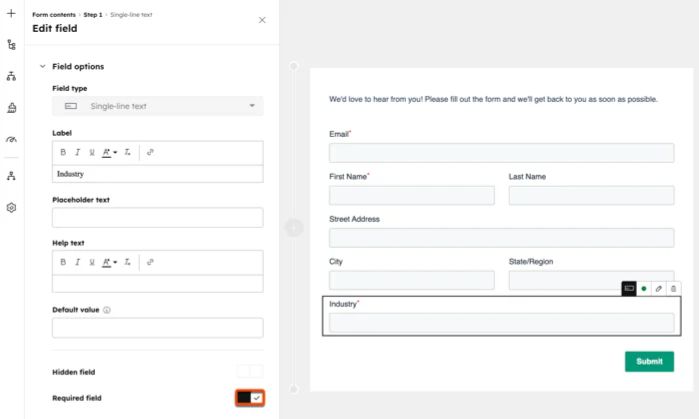
HubSpot’s form editor shows the Required field control for a form field. Source -
Test the mobile page through office delivery Check address validation and slot loadingKeep a callback fallback
On a phone, run known-system, unknown-system and out-of-area requests. Test a slower connection and an unavailable appointment. Check that a loading or validation failure leaves a clear way to request a callback.
Inspect the actual contact and service request after each accepted test. If booking occurs, verify calendar, local time and assigned staff. A page displaying available slots cannot establish that a visit was saved.
-
Measure accepted requests and routing corrections Track technical unknowns separately from errorsFollow requests to completed service
Record unknown-equipment inquiries, office clarifications, confirmed appointments and completed visits. Separate genuine outside-service requests from preventable form failures. Check duplicates when a customer retries or also calls.
If PostHog is used, compare form starts with accepted requests and keep error events distinct. Have your web person avoid sending contact details or form text to analytics. Use dispatch corrections to improve the questions.
What to measure
Keep the unknown-system test with the booking configuration. Rerun it after field, calendar or service-area changes.