Prioritize garage door callbacks with verified call and page context
A caller may have visited both repair and replacement pages. Your office can use that context to prepare a question, but the caller's confirmed request controls routing. Check existing jobs before another callback task.
Steps
-
Inspect the actual missed call Save the call reference and timeReview available page and source evidence
With visitor tracking, CallRail timelines can show associated website activity. Open the actual record for the missed call.
The shared image is a documentation example. Keep missing history marked unknown and do not infer which household member browsed.
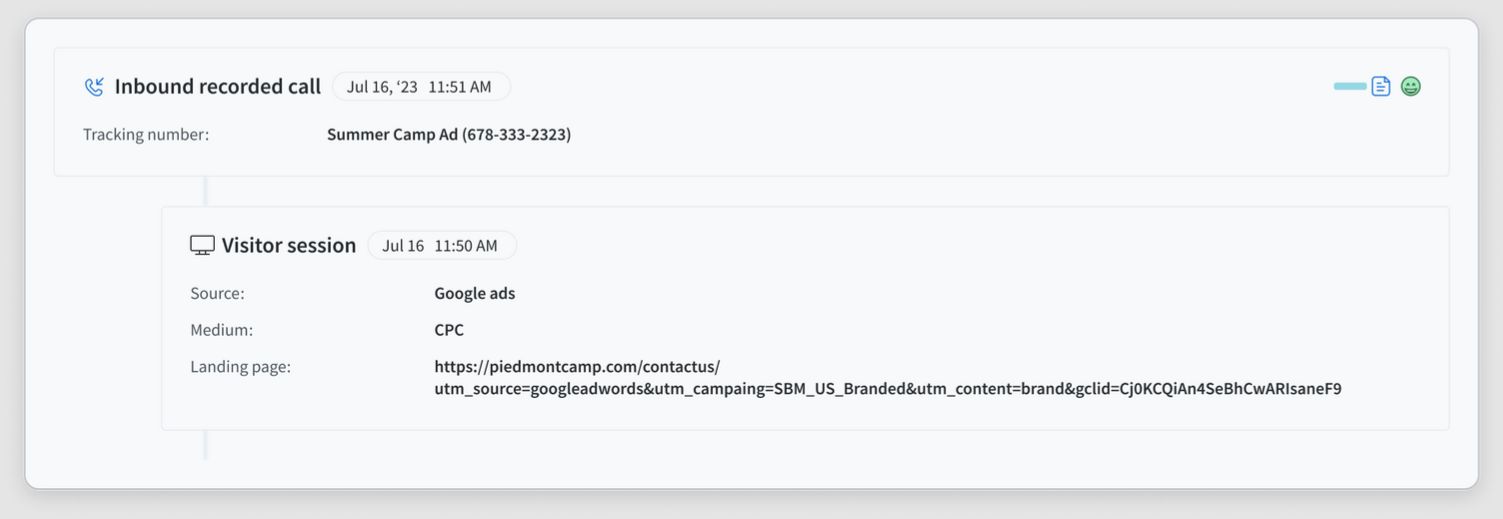
CallRail’s example of the visitor session attached to a tracked call. Source -
Check verified CRM relationships Use reliable shared contact detailsInspect open repair and replacement work
Search the actual callback details and property supplied by the customer. Check current appointments and quotes before creating another opportunity.
Leave uncertain matches separate. Similar timing or ZIP cannot establish a person-level connection between a browsing record and caller.
-
Assign the callback by real operational need Use reported urgency and availabilityPrepare one relevant scope question
Let dispatch apply its staffed escalation rules to the actual report. Give routine callbacks a named owner and due time.
Ask whether the person wants service for the current door or a replacement discussion. Page context supports that question without deciding the answer.
-
Compare contacts with completed outcomes Track correct routing and attendanceRecord duplicate and uncertain joins
Review unique callers, successful callbacks, qualified visits and completed jobs. Keep repairs and replacement opportunities distinguishable.
Audit a small sample of joins and routing corrections. Improve matching and intake before making automated priority rules more aggressive.
What to measure
Use a short manually reviewed queue first. Every callback reason should be explainable from a real request, verified history or clearly bounded page evidence.