Route active-water reports out of routine after-hours flooring booking
A flooring call may mention current water entering the property. Reception should preserve that report and use your approved handoff. A future flooring appointment is separate from resolving the reported incident.
Steps
-
Approve the response boundary Separate routine estimates and active reportsName the staffed handoff
Have your lead define minimal questions for property, reported condition and callback. Keep technical and safety advice with the appropriate responsible staff.
Write actual coverage hours and fallback. Avoid promising restoration, diagnosis or immediate attendance through a flooring script.
-
Verify the real incoming route Test primary and backup destinationsUse the advertised number
HighLevel documents inbound routing and backup behavior. Compare actual configuration with the service your site claims.
Run controlled routine and active-water scenarios. Confirm forwarding or voicemail does not bypass the intended handoff.
-
Inspect staff receipt and fallback ownership Test an unanswered contactPreserve the original report
Check who receives the note and what happens if the first person cannot respond. Give the customer the actual callback expectation.
The shared CallRail image is an example. Inspect your real test timeline and unresolved task rather than treating a logged call as accepted response.
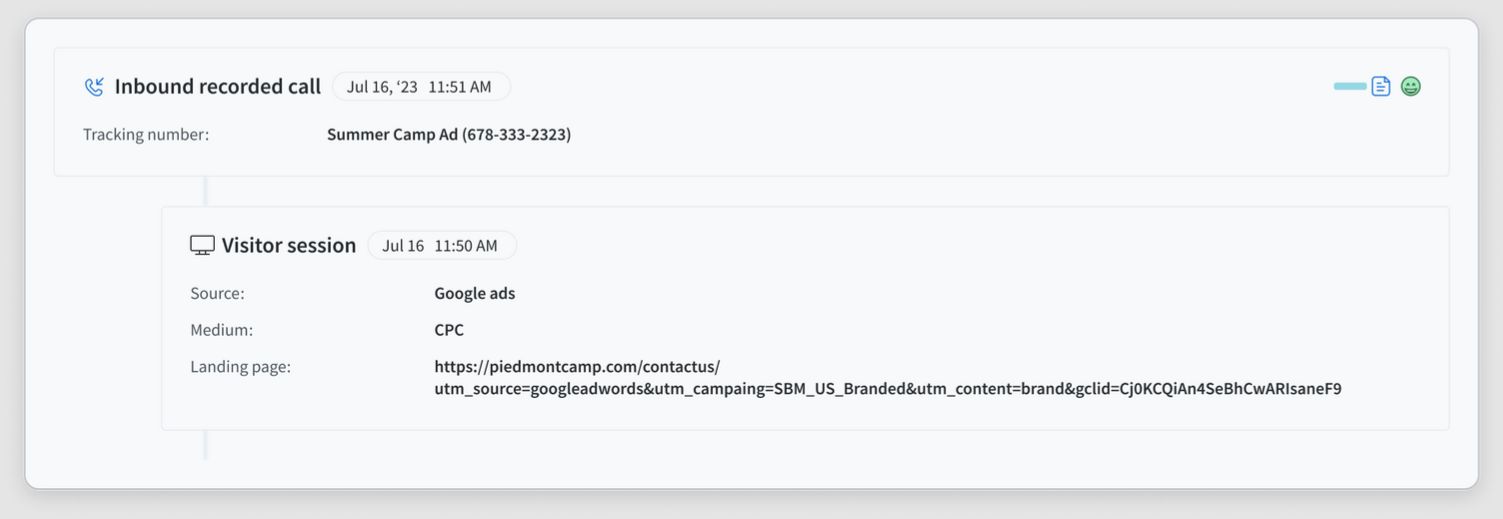
CallRail’s example of the visitor session attached to a tracked call. Source -
Review the next professional step Keep incident and flooring scopes separateTrack human contacts and attended visits
Check existing project history and record the responsible owner for each requested service. Arrange flooring review only through the appropriate process.
Measure completed handoffs, unresolved callbacks and attended flooring assessments. Correct unsupported promises before promoting after-hours availability.
What to measure
Repeat the failed-handoff test after phone or staffing changes. The route should preserve the actual report and avoid substituting an ordinary estimate for the needed review.