Prioritize fence callbacks without guessing identity from page activity
A person can browse several fence materials before calling. Use that history to prepare a question, with the actual request and verified CRM relationship controlling routing. Keep unclear household connections separate.
Steps
-
Open the actual unresolved call Save the call reference and sourceInspect available associated pages
CallRail visitor tracking can show associated page context in a caller timeline. Review the specific call your office needs to return.
The shared image is a documentation example. Mark missing history unknown and keep the original call evidence intact.
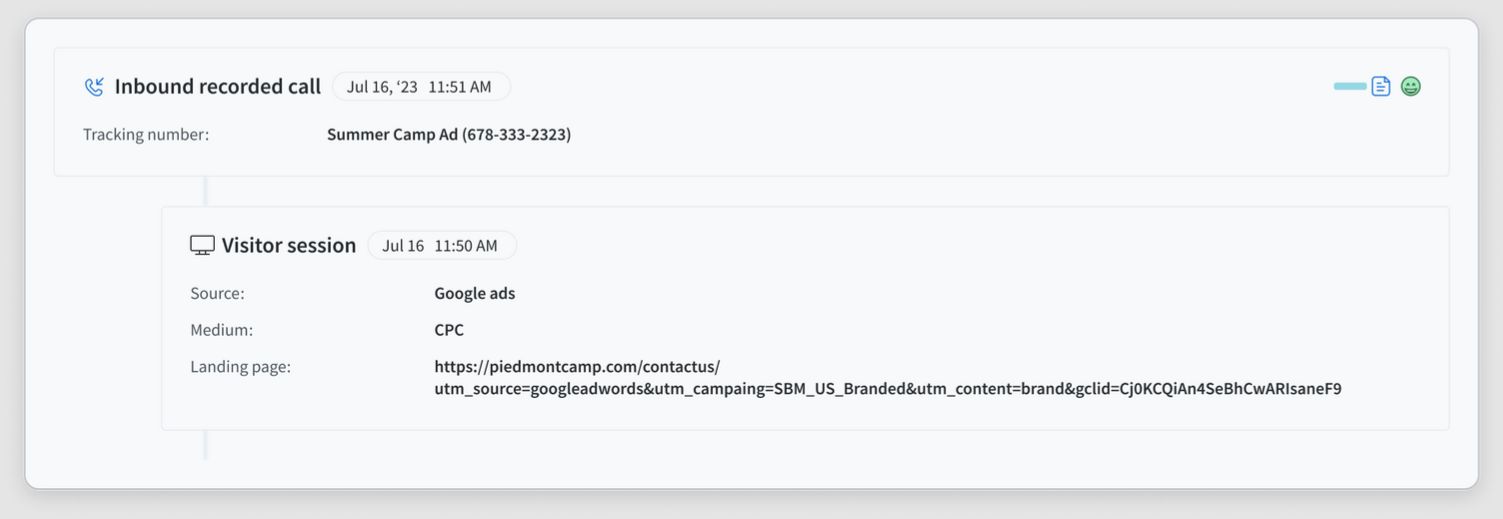
CallRail’s example of the visitor session attached to a tracked call. Source -
Check the actual customer and property Use reliable shared contact detailsReview open quotes and site visits
Confirm property and project with the caller. Check an existing opportunity before creating another callback task.
A shared ZIP, timing or household address cannot establish which person used the browser or which property needs fencing.
-
Assign the next conversation Ask intended use and gate needsSet a named owner and due time
Use customer-confirmed purpose, timing and actual service fit to prioritize the callback. Give technical uncertainty to qualified assessment.
Use browsing context only to prepare a relevant question. Avoid estimating project value from unverified length or property fields.
-
Audit routing against attended estimates Review weak joins and duplicatesTrack actual accepted work
Measure successful contacts, serviceable estimates, attended visits and completed projects. Keep unknown-source cases visible.
Have the estimator review a small sample of priorities. Repair intake or record matching before automating more aggressive scoring.
What to measure
Start with a manually checked queue. Each callback reason should be traceable to a real request or clearly limited supporting evidence.