Use documented drain jobs to support one local service page
A local drain page should show work your team actually performs. Choose one documented scope and useful customer question. Keep technical findings and private property details bounded by the actual record and permission.
Steps
-
Select a publishable completed scope Verify service and outcome with the leadRemove identifying details
Use a real documented kitchen-line, sewer inspection or other service your team offers. Obtain permission for photos, location and description.
Preserve what the technician confirmed and where the work ended. Avoid extrapolating a known condition to neighboring properties.
-
Review actual page query themes Filter Search Console to the URLCompare questions with office intake
Inspect relevant queries, impressions and clicks over a stated period. Use office questions where low-volume search data is missing.
The shared screenshot shows Search Console filters. Keep aggregate query evidence separate from individual customer identity or a confirmed service request.
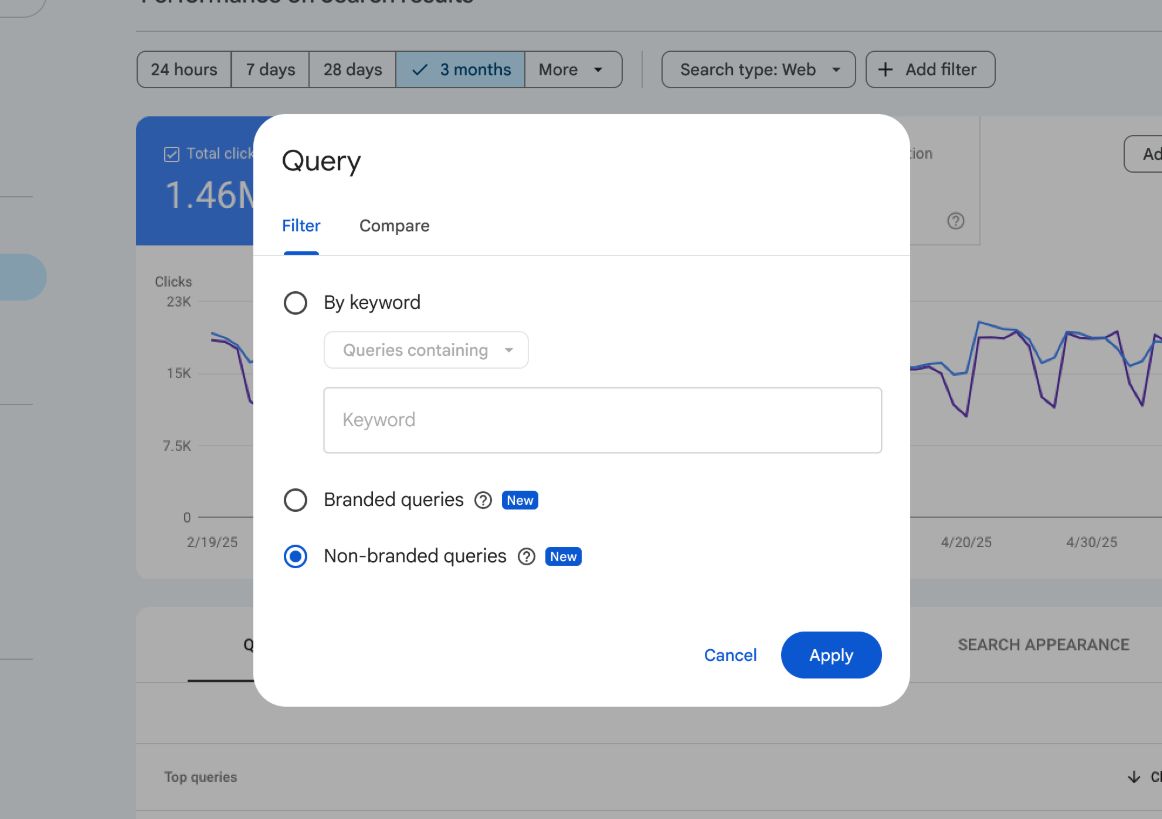
Google’s cropped Search Console example shows where to filter by keyword or choose branded and non-branded queries for an eligible property. Source -
Add useful scope explanation and intake State territory and real response availabilityTest request and phone routes
Explain the documented service and what information prepares a visit. Give the reader the actual staffed phone route and a short request.
Submit a controlled request and inspect source, property, reported issue and owner. Let unknown technical answers reach review.
-
Measure appropriate requested work Track attended visits and completionReview repeated service mismatches
Follow accepted inquiries to qualified visits, technician-approved scope and completed jobs. Preserve later touchpoints without erasing the original source.
Improve the page around actual unsuitable requests or unanswered questions. Do not invent another case or claim a ranking guarantee.
What to measure
Keep the approved job evidence with the page. Recheck source records and service coverage before broadening the local content.