Test human escalation for reported sewage in after-hours drain intake
An after-hours report about sewage needs your approved staffed response process. Reception should preserve the actual report and reach the responsible person. Test the unanswered fallback before advertising the route.
Steps
-
Approve the handoff boundary Use lead-approved collection questionsName the real staffed destination
Collect property, callback and the customer's reported circumstances. Keep uncertainty intact and use only approved guidance.
Record actual hours and fallback ownership. Avoid technical or health conclusions and unverified arrival promises.
-
Inspect the published phone route Review primary and backup behaviorUse an outside test phone
HighLevel documents inbound routing. Compare the actual account path with the number and response hours shown on your site.
Test routine service, reported sewage and an unanswered escalation contact. Save timestamps and the actual destinations reached.
-
Verify the staff handoff and notes Check the original report reaches a personAssign unresolved callbacks
Confirm the intended staff member receives the request and a clear next action. Keep the customer expectation accurate when no immediate acceptance occurs.
The shared CallRail timeline is an example. Inspect your actual call and task. Logged routing is separate from staff accepting dispatch.
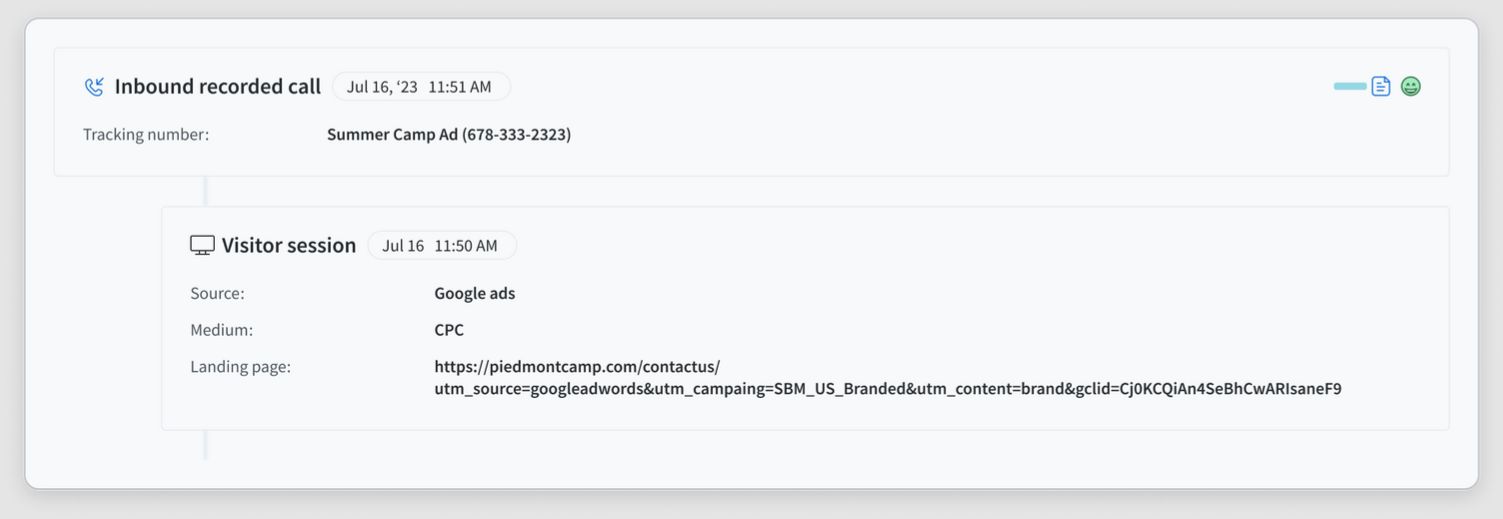
CallRail’s example of the visitor session attached to a tracked call. Source -
Review the next-shift queue Check open episodes before another jobMeasure completed human contacts
Give unresolved requests to a named owner with the original report. Keep a repeat about an existing episode from creating competing visits.
Track human handoffs, unresolved callbacks, attended visits and completed work. Repair unsupported answers or missing ownership before expanding availability claims.
What to measure
Rerun failed-transfer scenarios after staffing or routing changes. The route should preserve the report and produce an accountable human decision.