Keep attic requests for two units separate at one street address
A shared street address can hide separate units and attic access. Confirm the unit before attaching a new request to an old assessment.
Steps
-
Collect the complete property reference Ask for the unitConfirm who provides access
Record the unit, entrance and contact coordinating the visit. Ask whether the attic is shared or the customer is unsure.
Preserve the customer’s answer without deciding ownership or access rights from the address alone.
-
Make the unit question usable Require a callback methodAllow shared-access uncertainty
Review HubSpot’s form requirements so the customer can describe the unit without supplying a technical building designation.
Test two unit requests at the same street address and inspect the office submissions.
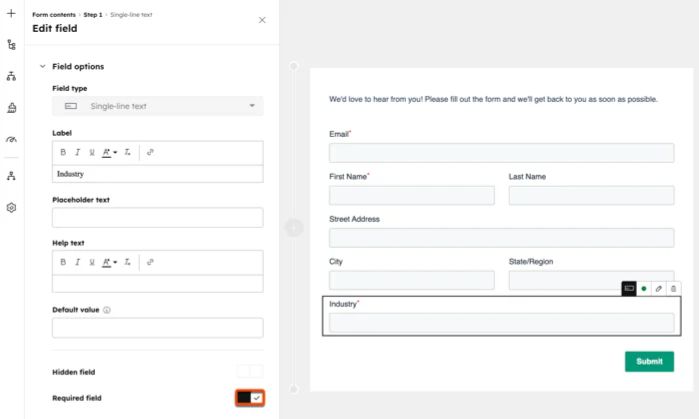
HubSpot’s form editor shows the Required field control for a form field. Source -
Review records before joining them Compare unit and project scopeKeep uncertain associations pending
Have the coordinator compare existing inspection records, verified contacts and unit notes. Avoid merging on street address alone.
Ask the customer to clarify access and the requested assessment. Name one owner for each confirmed scope.
-
Audit the appointment handoff Check unit in confirmationsRecord wrong-record corrections
Verify the assessor’s brief and customer confirmation both identify the correct unit and entrance.
Track requests assigned to the wrong old record and fix the field or matching rule responsible.
What to measure
A complete unit and access reference should travel with every assessment request.