Affiliate Marketing for Apps: A Complete Playbook
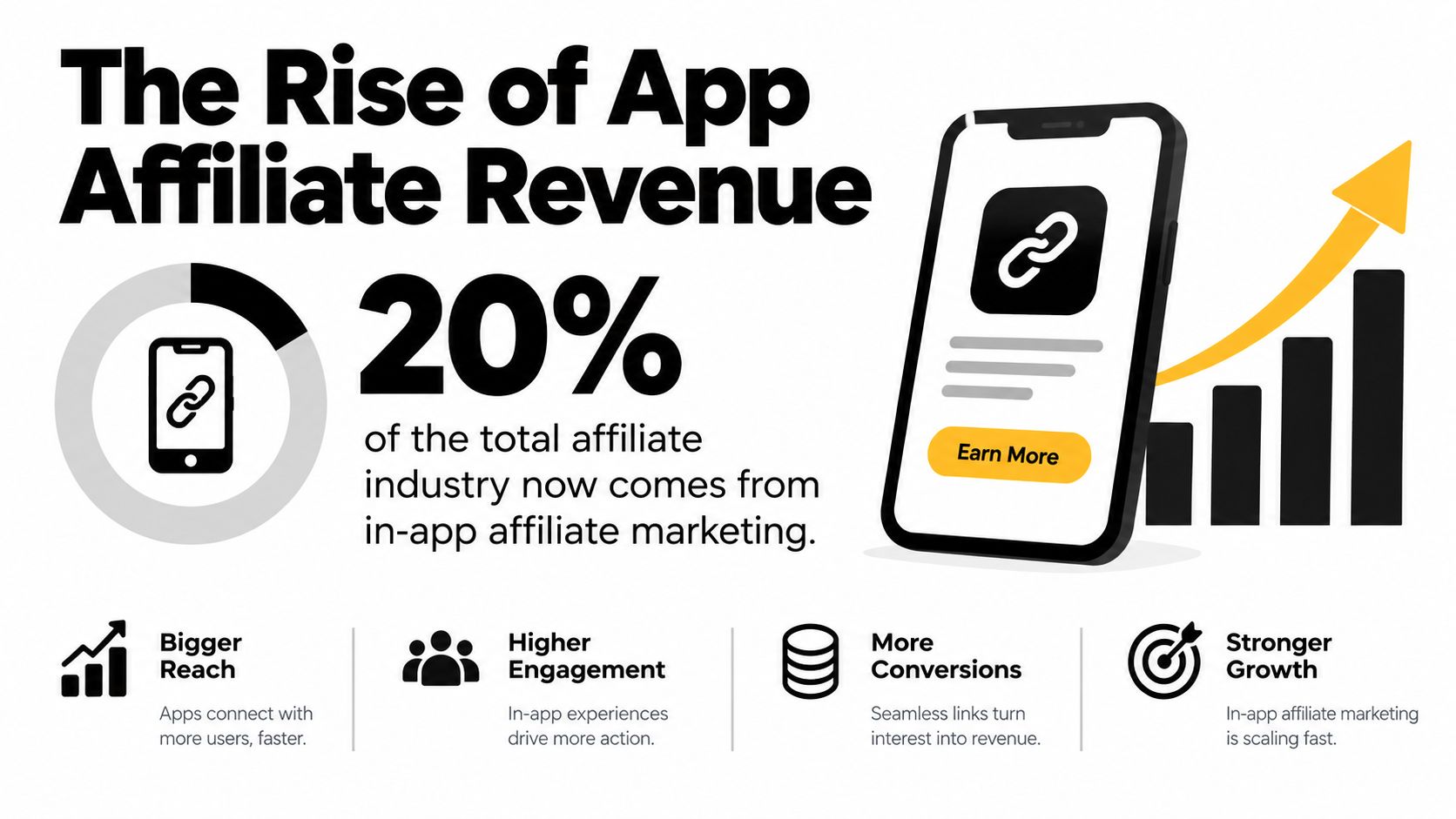
In-app affiliate marketing now accounts for about 20% of the total affiliate marketing industry, contributes roughly 25% of top-performing apps’ revenue, and mobile traffic generates 50% to 62% of affiliate-driven visits, depending on the niche and audience. OptinMonster’s affiliate marketing statistics show why app partnerships have moved beyond a side channel.
The operating model is simple. An affiliate promotes your app and earns a commission only after a defined conversion, such as an install, registration, purchase, or subscription event. The difficult work starts when you decide what counts, how attribution survives privacy restrictions, which partners deserve access, and how you stop low-quality traffic from consuming your budget.
Table of Contents
- Why Affiliate Marketing for Apps Became a Real Revenue Channel
- Designing Your Payout Model and Commission Structure
- Setting Up Tracking and Attribution That Survives Privacy Rules
- Choosing Partner Types and Onboarding Them the Right Way
- Stopping Affiliate Fraud Before It Drains Your Budget
- Measuring Results and Optimizing for Scale
- Your First 90 Days Running an App Affiliate Program
Why Affiliate Marketing for Apps Became a Real Revenue Channel
Affiliate acquisition became a practical app growth channel because partners can place an app inside content, communities, comparison pages, and product recommendations that already influence user decisions. The channel earns its place when those placements produce users who activate, buy, or stay subscribed, rather than merely increasing download volume.
For an app operator, performance-based acquisition changes the budget risk. A partner receives payment after producing an agreed result instead of charging for exposure alone. That arrangement can work well, but the right partner and revenue event vary sharply by app type.
A gaming app may benefit from streamers, gaming communities, deal publishers, and creators who can demonstrate progression or exclusive items. Their traffic can deliver volume quickly, but incentivized users may install only to collect a reward and then disappear. A B2B SaaS app needs a different mix: software reviewers, workflow consultants, newsletter publishers, and niche educators can explain the product to users with a longer evaluation cycle. The audience is smaller, but a qualified account or paid subscription can support a higher commission.
A commerce app can recruit creators whose content drives product discovery, while a finance or health app may need stricter review of claims, placement, and audience quality. Partner reach matters less than whether the partner can create informed demand without damaging trust.
The operating question is therefore economic, not cosmetic. Conversion definition determines whether the program rewards cheap volume or durable customer value. A gaming operator may accept an activated player as the payable event. A subscription app may need a verified account and an initial paid period before releasing commission. Those choices affect partner interest, cash flow, and fraud exposure.
Operating rule: Build the affiliate channel around the user behavior that supports revenue, then select partners capable of producing that behavior.
Affiliate marketing becomes a real revenue channel when the program can distinguish useful growth from attractive but unprofitable activity. That requires clear event rules, privacy-aware measurement, and payment review before the channel expands. Payout design and commission structure should follow those operating conditions.
Designing Your Payout Model and Commission Structure
Start with the revenue event, then work backward to the commission. Don’t begin with the payout rate offered by another app. Your app’s monetization path determines whether an install, action, purchase, or recurring payment deserves credit.
Match the model to the monetization event
Cost per install, or CPI, pays when a user completes an install attributed to the affiliate. It fits free apps that need a broad user base and have strong downstream activation. CPI is a poor choice when many users install but never reach the event that supports revenue.
Cost per action, or CPA, pays after a defined action such as registration, account verification, trial activation, or onboarding completion. Use CPA when the user must create an account or demonstrate intent before your business can monetize.
Cost per purchase, or CPP, pays after a transaction. It suits commerce, paid tools, digital goods, and apps where the first purchase provides a clear economic signal. Define whether refunds, cancellations, and chargebacks reverse the commission.
Revenue share pays the partner a portion of the revenue generated by the referred customer. This structure aligns the partner with subscription retention and recurring payments, but it requires dependable revenue reporting and clear rules for renewals.
| Payout Model | You Pay When | Best Fit | Fraud Risk |
|---|---|---|---|
| CPI | An attributed install completes | Free apps building an active user base | High if you don’t validate post-install quality |
| CPA | A registration or defined action completes | Apps monetizing through accounts, trials, or signups | Moderate, especially around incentivized actions |
| CPP | A purchase is completed and remains valid | Commerce and transaction-based apps | Moderate, with refund and chargeback exposure |
| Revenue share | Referred revenue is collected | Subscription and recurring-revenue apps | Lower at the initial event, but complex over time |
Published examples show how widely commissions vary. The mobile app affiliate program examples from UpPromote list Apple App Store at 7%, Apple Books at 7%, Blinkist at 20%, and Coinbase at 50% for the first three months. The same source includes fixed offers such as €0.49 per install-plus-open completion.
Those figures are benchmarks, not targets. A marketplace with repeat purchases can support a percentage of revenue. A free app with uncertain retention may need a fixed CPA tied to activation. A subscription app should calculate the commission against collected revenue, not the headline subscription price.
Practical rule: Never pay for an install when your revenue event happens three sessions later.
Set the qualifying event in writing. Specify whether the user must open the app, complete onboarding, verify an email address, start a trial, make a non-refunded purchase, or remain subscribed. Give affiliates a payout schedule they can understand, and reserve the right to hold commissions until the validation period ends.
Commission tiers can reward partners who deliver profitable users, but don’t create tiers around raw volume alone. Base higher rates on retained users, completed revenue events, or clean subscription revenue. Set a cookie or attribution window that reflects your buying cycle, then document how mobile attribution takes priority when a user interacts with several partners.
Skip blanket increases for every affiliate. Raise a partner’s rate when their users produce durable revenue and low support or refund costs. Keep the base rate controlled for partners whose traffic is unproven, and offer a temporary test rate only when you can measure the outcome separately.
Setting Up Tracking and Attribution That Survives Privacy Rules
Tracking starts with a clear conversion definition. State what the program pays for, then encode that decision in the measurement system. CPI, CPA, CPP, and revenue share each require an event name, validation condition, attribution window, and reversal rule. “New customer” is too vague to support reliable payouts.
Build the measurement path before recruitment
Install an affiliate tracking SDK or connect a server-to-server attribution system before inviting partners. The system should record the partner identifier, preserve the referral through the app store journey, and send post-install events to reporting. 23% of major advertisers have already implemented an in-app affiliate tracking SDK, according to coverage of mobile affiliate tracking and attribution.
Define events around business value. A utility app may count account creation followed by activation. A commerce app should record a completed purchase after payment validation. A subscription app needs trial start, paid conversion, renewal, cancellation, and refund events. That sequence separates an install from collected revenue and prevents an early conversion from receiving credit for revenue that never arrives.
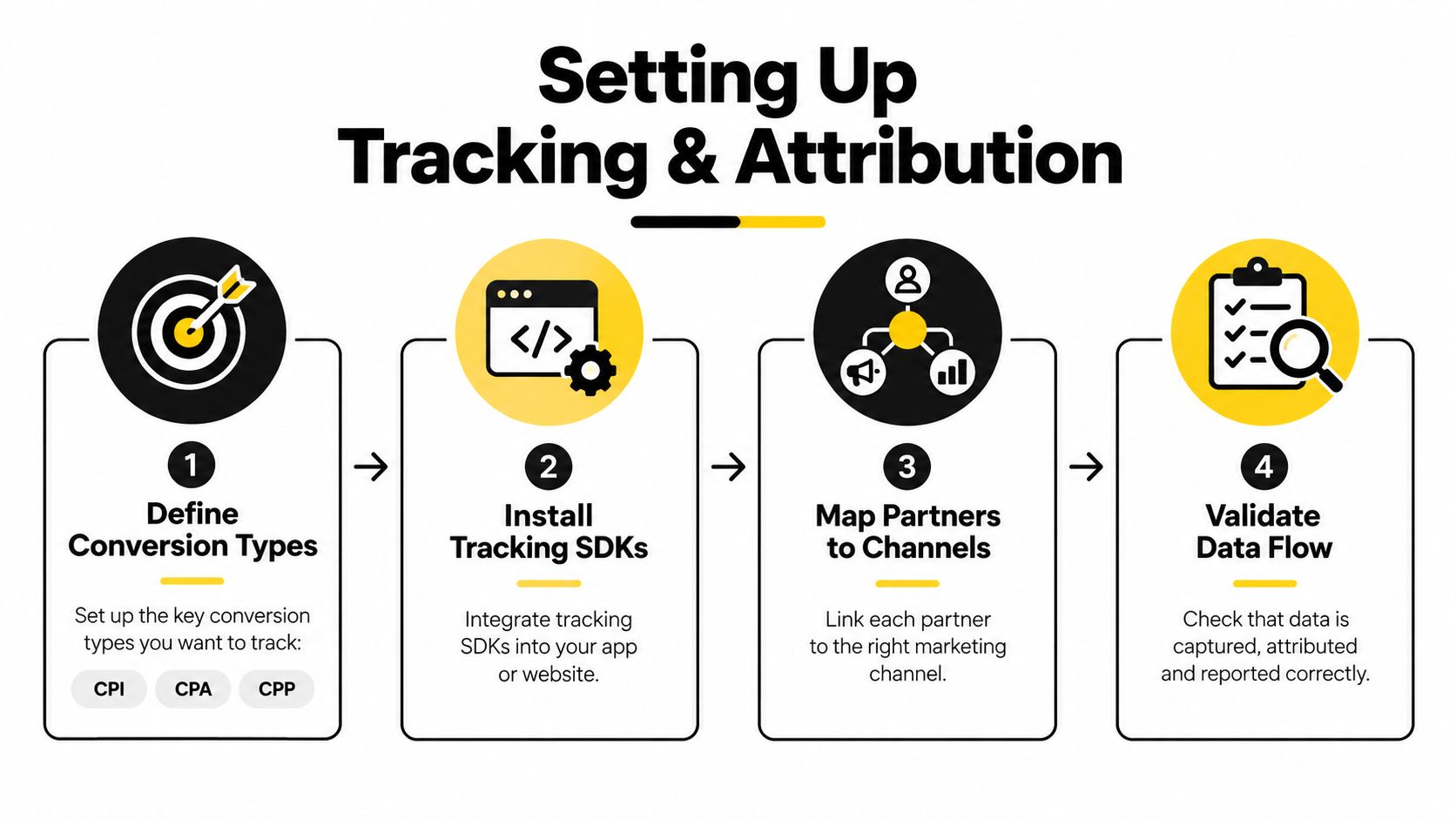
Use one event naming convention across the affiliate platform, product analytics, payment system, and finance reports. Test the full path with a controlled partner link: click, install, open the app, complete the qualifying event, trigger a refund or cancellation, and confirm that every system shows the same partner and conversion state.
Capture consent and preserve attribution quality
Put privacy checks in the launch checklist. APMA guidance on affiliate tracking compliance states that applicable consent should cover cookies and personal-data processing, with clear opt-in before affiliate tracking cookies are set. Regulations do not require one tracking technology, but cookies and similar tools still have to follow data-protection rules.
Apple’s ATT and similar requirements mean your reports must separate deterministic results from modeled or consent-limited attribution. Record the signal behind each conversion, the consent status, and the confidence level. A privacy-constrained report should show uncertainty instead of presenting modeled installs as observed revenue.
Apply the same discipline to fraud-resistant measurement. Flag duplicate device signals, impossible event sequences, rejected payments, and conversions that cannot be matched to a valid user event before they reach the payout file. For practical context on attribution modeling for trades, compare operating assumptions with Pipeline On’s attribution modeling guide, especially when referral activity leads to an offline or sales-assisted conversion.
The affiliate dashboard is one input, not the financial record. Reconcile its events with app analytics, subscription billing, refunds, and consent records. Hold or review any conversion that lacks a valid user event, rather than allowing an unmatched link to trigger an automatic payout.
Choosing Partner Types and Onboarding Them the Right Way
Partner type determines both the speed and quality of acquisition. Mobile devices drive over 50% of affiliate-referred traffic and over 50% of affiliate sales, while the 2026 mobile affiliate trends guide from Clickadu describes continued movement toward influencer programs and mobile-first discovery. The same source projects iOS user acquisition to grow by 35%.
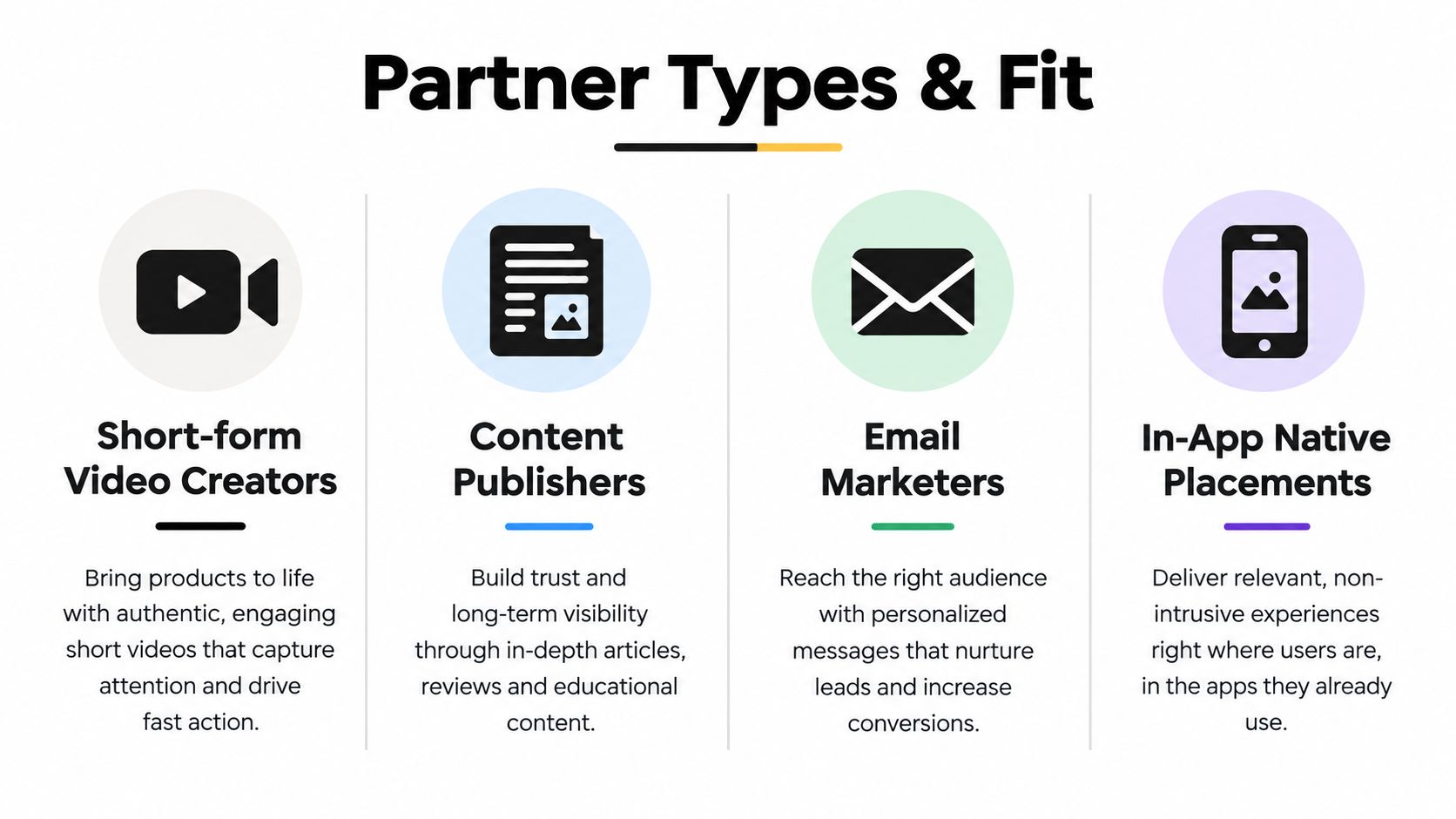
Short-form video creators can produce fast install volume when the app has a visual demonstration or a strong use case. They work well for gaming, lifestyle, fitness, and consumer utilities where the audience can understand the product in seconds. The trade-off is volatility. A video can generate attention without producing subscribers, so pay creators against the event your economics require.
Content publishers and reviewers usually produce slower, higher-intent traffic. Their comparison pages, tutorials, and app roundups can explain complex features and support users who are evaluating a subscription. They fit productivity, finance, business, and specialized utilities better than an impulse-install campaign.
Email marketers reach an owned audience with a known interest profile. A segmented list can work well for subscription apps and tools with a clear recurring use case. Don’t accept broad promotional blasts without audience and placement information. They can produce clicks while giving you little control over message, frequency, or user expectations.
In-app and native placements reach users inside a related product. A gaming app can promote another game, a field-service tool can recommend a scheduling utility, and a lifestyle app can surface a relevant paid service. These placements can feel natural, but they require careful creative rules so the recommendation doesn’t interrupt the core experience.
Give partners what they need to sell accurately
Create a one-page program brief covering the target audience, approved claims, prohibited claims, qualifying conversion, payout timing, attribution rules, and support contact. Add deep links that send users to the correct screen, not merely the app store listing. A creator promoting a scheduling app should link to the appointment workflow, while a publisher reviewing a subscription app should link to the plan or trial screen.
Provide creative in the dimensions each partner uses. Include screenshots, short videos, product descriptions, approved copy, and examples of compliant disclosures. A home-service app recruiting trade-content creators could supply a walkthrough showing how a contractor handles a customer request, then give the creator a deep link into that workflow.
Use an application process. Check the partner’s audience, traffic sources, past promotional content, and willingness to follow disclosure and brand rules. Start with a small group of relevant partners instead of opening the program to every applicant.
A useful comparison framework appears in this guide to best affiliate marketing niches. Apply the same logic to app categories. Gaming often needs reach and rapid creative testing, utilities need activation quality, and lifestyle subscriptions need trust plus recurring engagement.
Stopping Affiliate Fraud Before It Drains Your Budget
Affiliate fraud deserves operational attention from launch day. AppsFlyer’s 2026 study analyzed over 100 billion installs across more than 246,000 apps and found that affiliates accounted for nearly 40% of all fraudulent installs. The study reported affiliate fraud rates around 40%, compared with about 1% for self-reporting networks, as detailed in the AppsFlyer State of Fraud report.
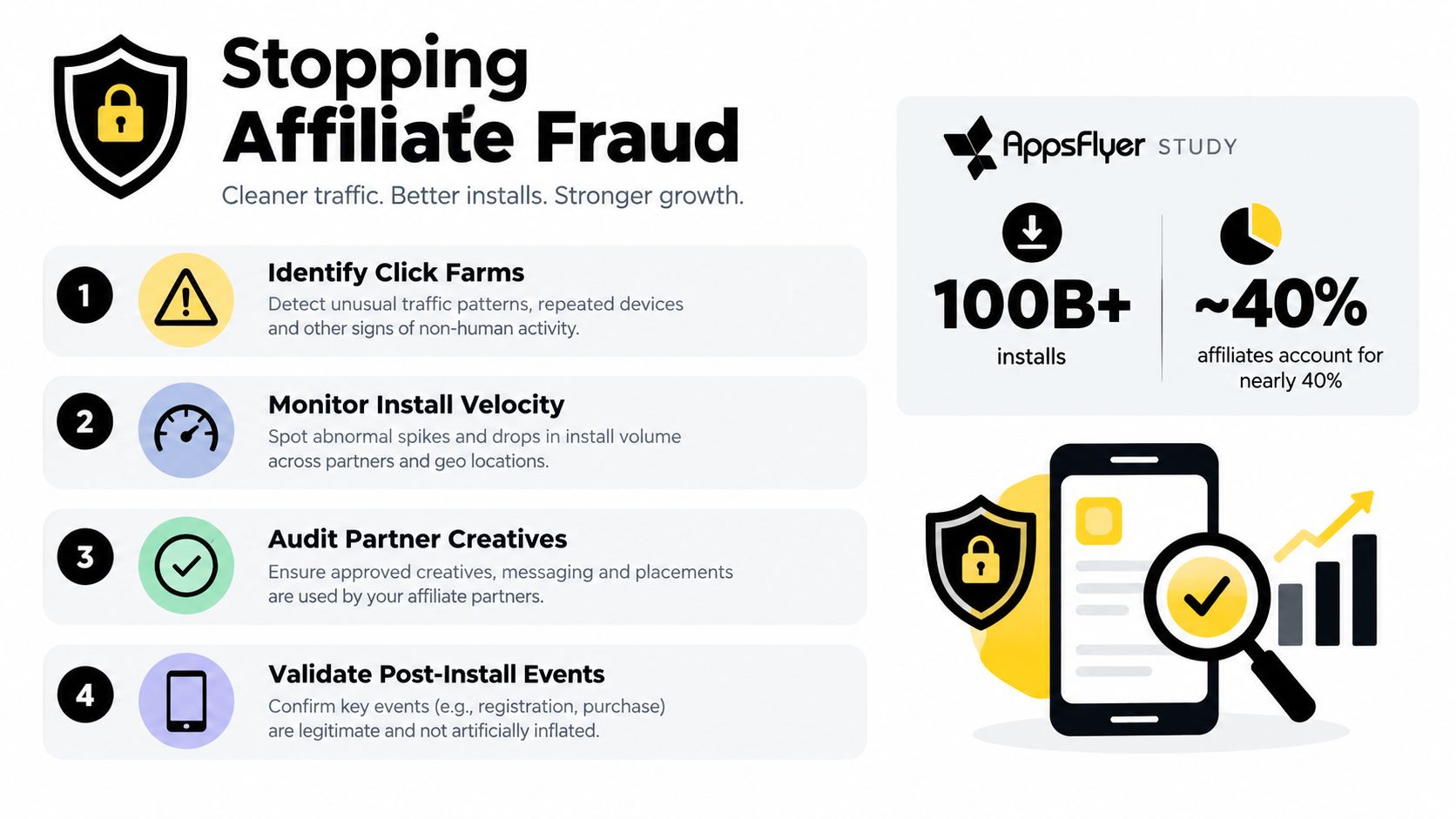
Separate reporting by partner, channel, campaign, operating system, geography, and conversion event. A blended affiliate number hides the source of the problem. One partner may deliver clean subscriptions while another produces a large volume of installs with no meaningful activity afterward.
Review quality after the install
Monitor the full sequence:
- Click to install: Look for unusual ratios, repeated identifiers, or traffic patterns that don’t match the placement.
- Install to event: Check whether users register, activate, purchase, or subscribe after installing.
- Event to revenue: Confirm that the conversion survives refunds, cancellations, chargebacks, and duplicate records.
- Partner comparison: Compare partners using the same event definitions and attribution rules.
Red flags include installs with no post-install events, sudden conversion spikes outside normal operating patterns, device clusters, repeated user behavior, and traffic that appears only after a payout rule changes. A high install count isn’t evidence of success when users never open the app again or reach the qualifying event.
Whitelist traffic sources that preserve post-install retention and conversion integrity. Keep a record of approved sub-publishers, placements, creative IDs, and tracking parameters. Block sources that refuse transparency or generate unexplained anomalies.
Fraud workflow: Flag the partner, hold the affected payout, request source-level evidence, compare post-install behavior, and pause the relationship when the explanation doesn’t match the data.
Don’t make fraud review a launch-week task. Assign an owner, review partner quality every week, and reconcile affiliate conversions with your analytics and billing systems. Release payouts only after the validation period and reversal rules have run. When a partner improves, restore access gradually rather than returning to unrestricted traffic immediately.
Measuring Results and Optimizing for Scale
A profitable program needs one view that places installs, signups, purchases, and recurring revenue beside each other. Separate dashboards encourage bad decisions. The install report says one partner wins, the billing report says another wins, and nobody can see the margin after commissions, refunds, and fraud write-offs.
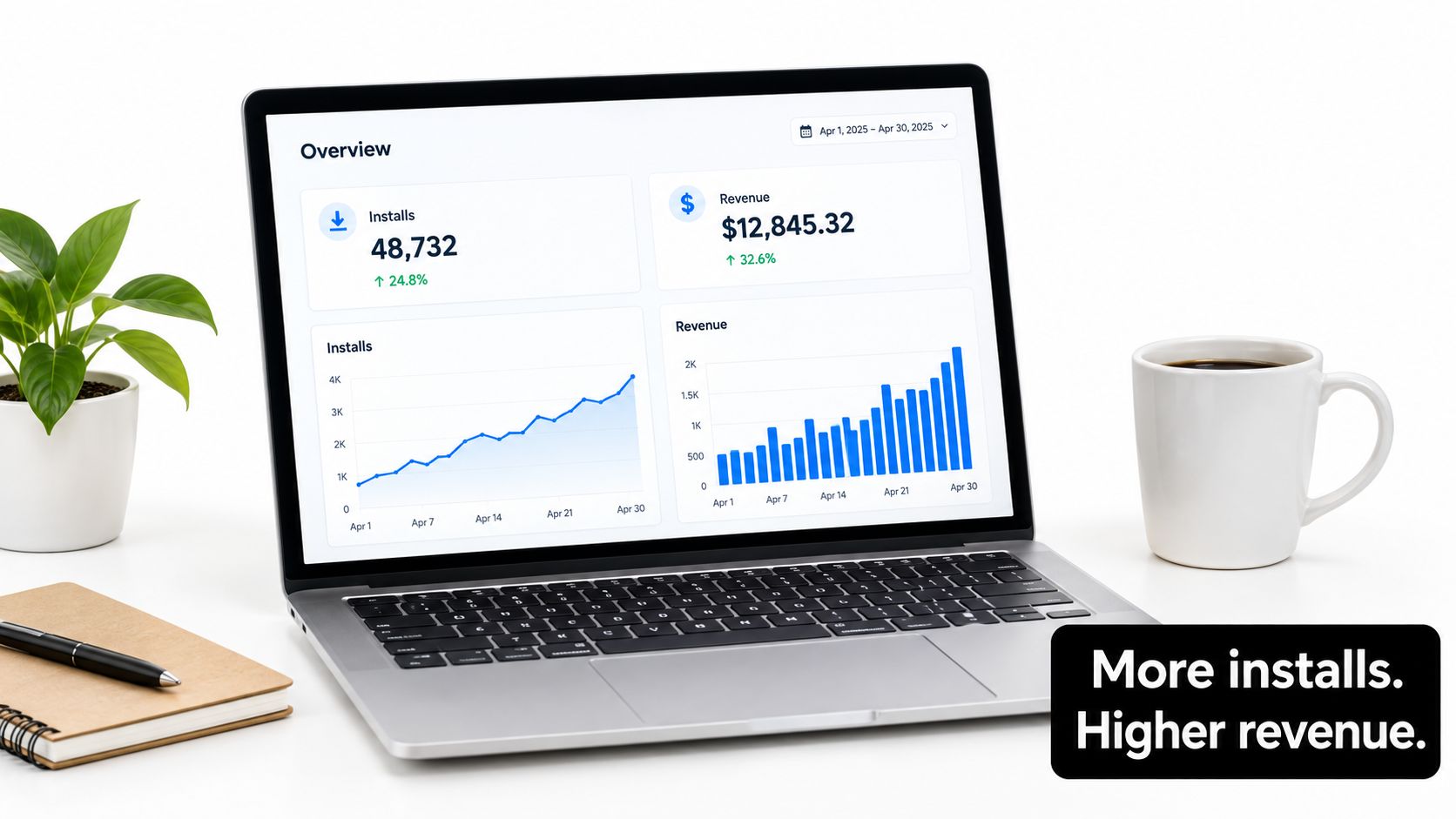
Build a partner-level report with these fields:
- Attributed clicks and installs: Use them to diagnose reach and funnel loss, not as the final success measure.
- Activated or retained users: Compare the cost of users who complete the behavior that makes the app useful.
- Revenue per referred subscriber: Track collected revenue over the period that matches your subscription economics.
- Partner-level margin: Subtract commissions, refunds, fraud write-offs, and variable servicing costs.
- Conversion quality: Review the path from click to install, install to event, and event to revenue.
Use multi-touch attribution when several partners or channels influence the same customer journey. Keep the payout rule explicit even if your broader marketing report uses multiple touches. Affiliate commissions need a consistent crediting policy, or partners will dispute results and finance won’t trust the numbers.
Optimize based on downstream value
Reallocate budget toward partners whose users retain, convert, and produce revenue. Prune placements that create installs without downstream events, even when their cost per install looks attractive. Renegotiate commissions with partners who consistently deliver recurring revenue, but tie the increase to verified revenue quality rather than promises of volume.
Test one variable at a time. Change the creative, geography, landing destination, or payout rule in separate tests so you can identify the cause of improvement or decline. Keep partner IDs and campaign labels stable enough to compare results.
Raise a partner’s commission when the partner delivers clean, incremental users and leaves room for a healthy margin after all costs. Walk away when the partner needs a higher payout to compensate for weak retention, disputed attribution, or repeated traffic-quality problems. Scale comes from concentrating access and budget on partners who create durable value.
Your First 90 Days Running an App Affiliate Program
Weeks one to three: Choose CPI, CPA, CPP, or revenue share based on your monetization event. Write the conversion definition, validation period, reversal rules, commission terms, and attribution window. Success means finance, product, and growth teams approve the same payout logic.
Weeks four to six: Install the tracking SDK or server-to-server connection, map post-install events, configure consent capture, and test the complete user journey. Recruit a small group of relevant partners with a brief, creative assets, deep links, and payout dates. Success means every test conversion appears correctly in analytics and billing.
Weeks seven to ten: Review partner and channel quality every week. Check click-to-install behavior, install-to-event quality, device patterns, and held payouts. Whitelist clean sources and pause unexplained traffic.
The final stretch: Compare installs, signups, purchases, recurring revenue, and margin in one report. Reallocate budget, adjust partner terms, and test one new channel or creative format at a time. For a concrete example of a partner program workflow, review how to become an AppLighter affiliate.
Avoid three mistakes: paying for installs before defining post-install value, skipping consent setup, and letting fraud reviews slip after launch.
Pipeline On helps home-service contractors identify website visitors, capture contactable leads, sync profiles with tools such as ServiceTitan, Housecall Pro, Jobber, HubSpot, and Pipedrive, and trigger follow-up through email, SMS, or postcards. Visit Pipeline On to connect lead attribution and conversion follow-up with the same disciplined measurement approach used to run an app affiliate program.
Written by
Pipeline Research Team