Separate window warranty inquiries from new quotes in HubSpot
A homeowner can ask about a seal on one installed window and request a replacement quote for another room. Your office needs both requests intact. Give each request its own purpose and owner while preserving the customer's existing contact and installation history.
Steps
-
Give the homeowner clear warranty and quote paths Publish separate forms for service questions and new work.Explain who reviews each submission.
In HubSpot's form editor, create a warranty inquiry form and a replacement quote form, or clearly separate the purposes in a supported setup. Ask for contact details and service address in both. The warranty form can ask for the existing installation reference and reported issue. Let people say they cannot find the reference.
The quote form should ask what additional work the homeowner wants. Say that warranty eligibility is reviewed against the actual installation and terms. A submitted warranty question should not automatically become a new sales opportunity. The screenshot shows HubSpot's form editor, where you configure the fields.
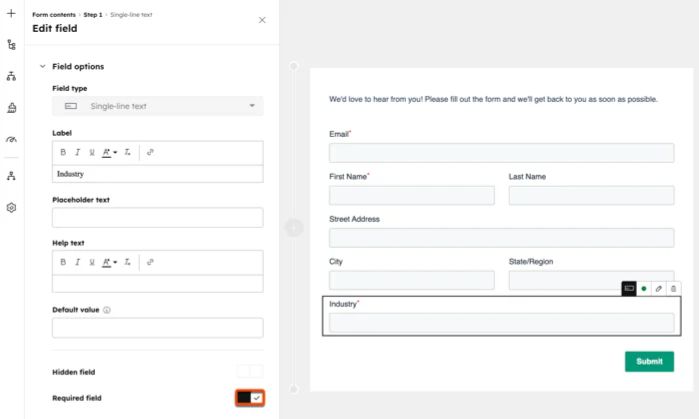
HubSpot’s form editor shows the Required field control for a form field. Source -
Preserve each submission beside the existing contact Inspect the matching contact before creating another.Keep warranty details and sales scope on their own request records.
HubSpot uses email addresses to deduplicate contacts, and a form submission can update an existing contact. Open the submission and inspect which contact it reached. Check the service address against installation records, particularly when one person owns several properties.
Keep the submitted warranty issue on the service request or ticket your office uses, and put the new replacement scope on its deal or quote request. Associate each with the correct contact. Use a manual handoff if your account has no verified automation. A contact-level field that changes on the next submission cannot serve as the full history of both requests.
-
Test two requests from the same customer Use the same test email on both forms.Check owners, notifications and the original installation history.
Submit a labeled warranty question, then a separate replacement quote request with the same test email. Inspect both submissions, their contact association and each destination record. Confirm the warranty owner can still find the first issue after the second request arrives.
Have the sales owner read only the current quote scope before calling. Verify that the warranty question has not enrolled the customer in a new-lead sales sequence. If the automation creates the wrong record or overwrites useful context, pause that path and assign manual tasks until the handoff is corrected.
-
Review service resolutions and sales outcomes separately Keep the warranty owner responsible through resolution.Count only confirmed new work in the quote report.
Record the warranty review, customer reply and resolution on the service request. Track an attended quote visit and accepted replacement work on the sales opportunity. A service callback should not inflate new estimate or new customer counts.
With PipelineOn installed, available returning website activity may add context after you verify the customer connection. The installation record and submitted request establish whether the office should discuss warranty service or new work. Keep uncertain matches outside both records until reviewed.
What to measure
Review unresolved warranty questions, correct request assignments and attended new-work estimates. Repeat the same-contact test whenever the forms or follow-up automation changes.