Test the scope behind your window-cleaning quote form
An online quote can look complete while leaving the crew unsure whether it includes inside glass, screens or tracks. Test the choices your customers actually make and compare the saved scope with the amount and confirmation they see.
Steps
-
Write down the pricing unit and included work Define how your company counts windows or panes.State the actual included surfaces and exclusions.
Have the quoting lead write the counting rule your company uses, with a photo example if it helps. Explain which interior, exterior, screen or track work each option includes. Give unsure customers a manual-review path instead of requiring an invented count.
List the situations your company reviews before a firm price, such as difficult access, construction residue or a glass type outside the standard offer. Keep the form's displayed terms consistent with what dispatch and the crew understand as a standard clean.
-
Configure the fields your office needs to verify the scope Collect the chosen service and the customer's count.Keep review-needed answers visible in the accepted request.
In HubSpot's form editor, add the service choices, service address, count answer and access questions your office uses. Check the connected properties and required-field settings. The screenshot shows this editor, including the control for requiring an answer.
Treat any displayed estimate calculator as a separate component that needs its own testing. The form editor screenshot does not demonstrate pricing logic. Have your web person verify how the actual selected options and calculated amount are saved together with the accepted submission.
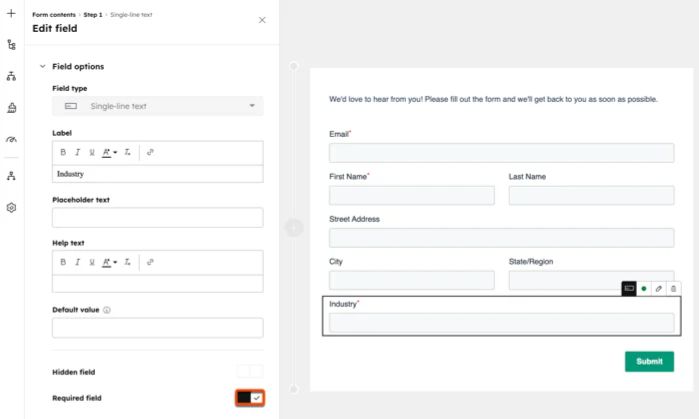
HubSpot’s form editor shows the Required field control for a form field. Source -
Run a scope test matrix on the published page Test the meaningful service combinations.Compare displayed scope, saved request and office notification.
Use controlled test records for exterior only, interior and exterior, screens included, an unsure count and a request needing access review. Add the edge cases your pricing rules actually support. Have the quoting lead calculate the expected result from your current price sheet before submitting.
On a phone, inspect the amount or review message before sending, then check the confirmation and office record. Change an option and go back a step to verify that stale choices do not remain in the saved scope. Record any disagreement so the web person can reproduce it.
-
Confirm reviewed requests and compare the first completed jobs Assign uncertain scopes to a quoting owner.Record changes between the web request and accepted work.
Have the office confirm the uncertain count, access or service option before accepting the job under your terms. Keep the original web request and approved scope available to the crew. Correct a quote through your normal customer-approval process when the actual work differs.
Review quote requests, manual checks, accepted bookings and completed cleans. Record avoidable scope corrections and which field caused them. Use that evidence to improve counting instructions or form logic before sending more traffic to the quote page.
If PipelineOn is installed, review available matches from the quote URL with no accepted request. Use reportable page context to identify questions worth simplifying. Send a manual callback task only when a verified earlier conversation supports follow-up and the property fits.
What to measure
Repeat the scope matrix after changing prices, options or the form. A useful quote leaves the customer, office and crew with the same accepted description of the work.