Decide whether house-washing Search spend pays after travel
Use actual house-washing jobs and travel time before increasing the campaign budget.
Steps
-
Build the completed-job cohort Use a defined campaign periodInclude route and labor costs
Match campaign inquiries to accepted scopes and completed jobs using supported source records. Leave unknown sources marked unknown.
Calculate contribution after actual wash labor, materials, travel and job-specific costs.
-
Check calls behind the cohort Read tracked caller timelinesVerify real job associations
Use CallRail’s available session evidence to check the house-washing page and campaign context for calls.
Join a call to a job only with corroborated customer and property details. Keep ambiguous associations outside the confirmed calculation.
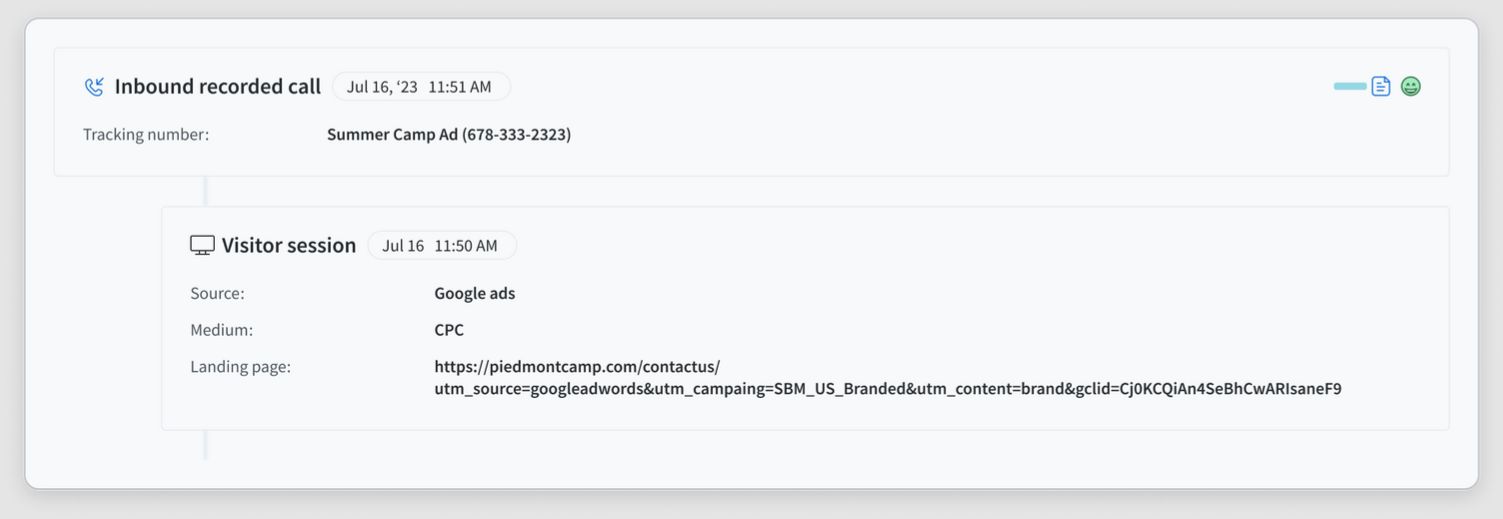
CallRail’s example of the visitor session attached to a tracked call. Source -
Compare acquisition with contribution Count distinct completed jobsKeep cancellations visible
Divide spend by attended estimates and completed jobs separately. Use the same cohort and allow for undecided quotes.
Check contribution remaining after acquisition and estimating time, including long drives that consumed crew hours.
-
Choose the budget change Confirm remaining route capacitySet a review condition
Ask dispatch whether additional jobs would fit the service area and staffed days. Keep an unfillable offer from spending more.
Maintain, reduce or test a measured increase and review when the new cohort reaches job completion.
What to measure
The next budget increment needs enough contribution and route capacity to support it.