Separate deck repair callbacks from new-build calls in CallRail
A caller reaching a new-deck page may be reporting a damaged stair. Confirm the work before choosing the callback owner.
Steps
-
Write accepted service routes Name the repair reviewerIdentify the design coordinator
Ask operations which repairs the company accepts and publish the correct staffed contact route.
Use your existing escalation procedure for reported hazards. Leave field decisions with the qualified team.
-
Review the tracked call Check the called numberRead session evidence
Open the CallRail caller timeline and compare available landing-page evidence with voicemail or call notes.
The page explains the route into the call. The customer’s stated request determines the scope owner.
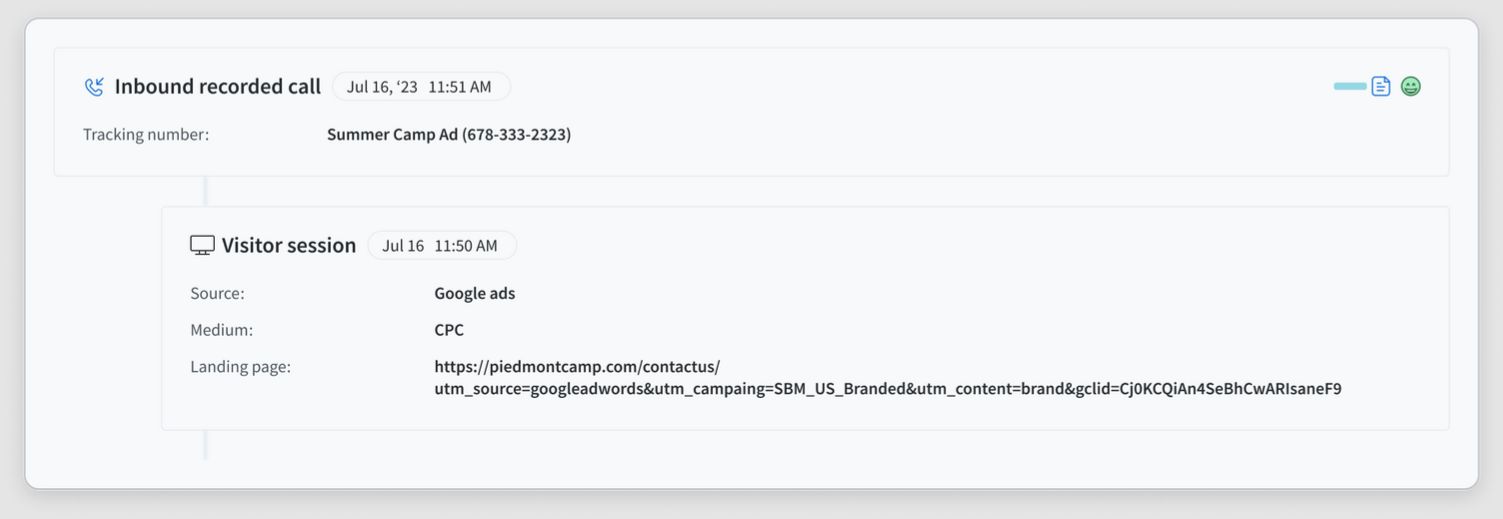
CallRail’s example of the visitor session attached to a tracked call. Source -
Confirm the requested work Ask which part needs attentionAssign a named callback
Record the property and clarify existing-deck work versus a new structure. Keep uncertain descriptions visible.
Send repairs to the repair reviewer and design inquiries to the consultation owner.
-
Audit first-call routing Count owner transfersRecord accepted assessments
Review callbacks transferred after the first conversation. Find the intake question or page wording causing confusion.
Track repair assessments separately from design consultations and repair the repeated source of wrong-owner callbacks.
What to measure
Use call evidence to put the requested scope with the right person.