Turn a chimney inspection report into a clear repair-estimate handoff
An inspection report can contain several findings while the customer asks about one repair. Give the estimator the actual report and the customer's question. Keep a new repair discussion separate from the completed inspection and its technical conclusions.
Steps
-
Start from the professional's completed report Check report date, property and inspected system.Keep findings attached to their original evidence.
Open the completed inspection record and confirm the property, system identifier and report version. Have the responsible professional identify the findings relevant to a repair discussion and any questions that need further assessment.
CSIA describes different inspection levels with different scopes. Preserve which inspection was actually completed instead of treating every report as an examination of everything. Keep photographs and references associated with the report your customer received.
-
Confirm which repair the customer wants discussed Record the customer's actual request.Let the qualified professional answer use and safety questions.
Ask which finding or proposed work the customer wants your company to assess and who can authorize the next visit. Record any deadline and access change. Do not turn opening a report link into acceptance of repair work.
Keep technical interpretation with the qualified professional. Your follow-up should arrange the right conversation without changing the report's conclusions or making an unsupported assurance about continued use. Confirm whether another inspection or specialist review is needed before preparing the scope.
-
Create one repair opportunity with the current report Check for an existing estimate before creating another.Assign the estimator and attach the relevant references.
If your office uses Pipedrive, select the pipeline that owns chimney repair estimates and inspect the existing project. The screenshot shows the pipeline selector. Confirm property and scope before adding an opportunity, then assign one estimator with a next-action date.
Attach the current report and note the findings the customer asked about. Keep completed inspection status intact. A repair quote should have its own accepted scope and outcome. Check that the estimator can open the documents through their normal account before relying on the handoff.
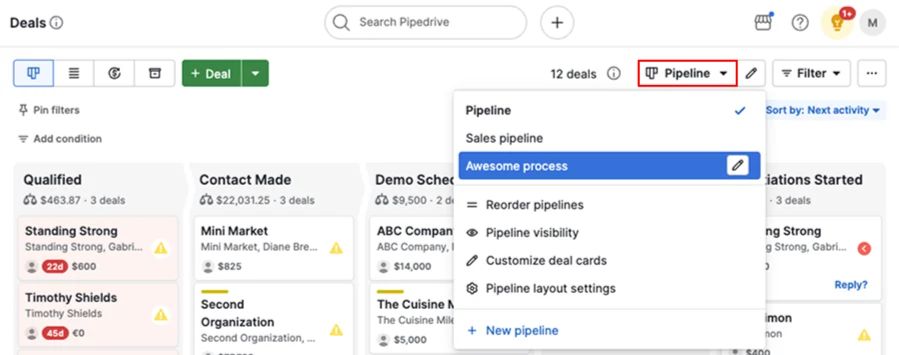
Pipedrive’s sample deal board shows the pipeline selector. Open the pipeline that contains the original proposal. Source -
Verify the proposal and stop duplicate follow-up Check the current quote against the reviewed scope.Record acceptance and completed repairs from actual work records.
Have the estimator confirm the proposal references the correct property, system and report version. Preserve exclusions and unresolved questions in the approved quote. Update the original opportunity when the customer replies or books so another reviewer cannot assign the same repair again.
Track requested repair discussions, attended assessments, delivered quotes, accepted work and completed repairs separately. With PipelineOn installed, checked return-page activity can add context to an existing opportunity. It cannot select repair scope or substitute for authorization.
What to measure
Review whether estimators received the right report and a confirmed customer question. Use missing references and duplicate tasks to improve the inspection-to-estimate handoff.