The 95 5 Rule for Home Service Contractors
Roughly 5% of visitors are ready to buy right now, while the other 95% aren’t lost. Most will need your service within months, and ignoring them is why your lead volume stays flat despite steady traffic.
That’s the uncomfortable lesson behind the 95 5 rule. If you run an HVAC, plumbing, roofing, electrical, garage door, or other home-service company, your website traffic includes people with urgent problems, people planning expensive work, and people gathering information long before they hire anyone. A form submission captures only the first group.
I’ve wasted money chasing ready-to-buy traffic, and the pattern is predictable. The ads produce calls, the calls slow down, the budget gets cut, and the same cycle starts again. Your website can keep attracting visitors while your pipeline stays thin because you’re harvesting existing demand without creating a reason for future buyers to remember you.
Table of Contents
- Why Your Website Traffic Feels Like a Leak
- What the 95 5 Rule Actually Means
- Why the 5 Percent Might Be Higher for You
- The Two Jobs of Contractor Marketing
- How to Identify Who Is Actually Ready
- Recovering the 95 Percent with Pipeline On
- Putting It All Together for Long-Term Growth
Why Your Website Traffic Feels Like a Leak
You watch the analytics. A homeowner lands on your furnace repair page, checks your service area, reads an article about gutter cleaning, and leaves. No call. No form. No appointment. You mark the session as worthless and move on to the next click.
That decision creates the leak.
The visitor may have been researching a service they’ll need later, comparing repair options, checking whether you work in their neighborhood, or trying to understand the likely scope of a project. A single visit doesn’t tell you that the opportunity is gone. It tells you the visitor didn’t take an explicit action during that session.
The practical explanation appears in the analysis of why website traffic doesn’t convert. Non-converting traffic contains different levels of intent, and treating every visitor as either a booked job or a dead lead gives you a distorted view of your marketing.
The ready buyer gets all your attention
Most contractor advertising is built around immediate demand. You bid on “emergency furnace repair,” “roof replacement near me,” or “plumber open now.” Those terms can produce valuable calls, but every competitor is chasing the same small pool of people.
The ready buyer deserves fast response and a clear booking path. Your mistake is stopping there.
A homeowner reading about maintenance may become a replacement customer after a seasonal failure. A property owner comparing roofing materials may request an estimate after a weather event. A family researching electrical panel upgrades may return when a renovation moves forward. They’re commercially relevant, but they don’t fit a same-day conversion report.
Contractor rule: A visitor who doesn’t call today still deserves a place in your demand strategy.
The 95 5 rule changes the question from “Why didn’t this person convert?” to “What evidence shows where this person is in the buying cycle?” That shift protects you from cutting useful traffic just because it didn’t create an instant form submission.
You need two responses. Capture urgent demand aggressively, then keep your company familiar to people who are still researching. Your traffic isn’t leaking because every visitor should call. It’s leaking because you’ve built no system for the people who leave before they’re ready.
What the 95 5 Rule Actually Means
The 95:5 rule is a B2B marketing principle associated with Professor John Dawes of the Ehrenberg-Bass Institute and later popularized by the LinkedIn B2B Institute. It says that, at any given time, approximately 5% of potential buyers are actively in-market, while the remaining 95% are out-of-market and more likely to purchase later, as explained by the LinkedIn B2B Institute.
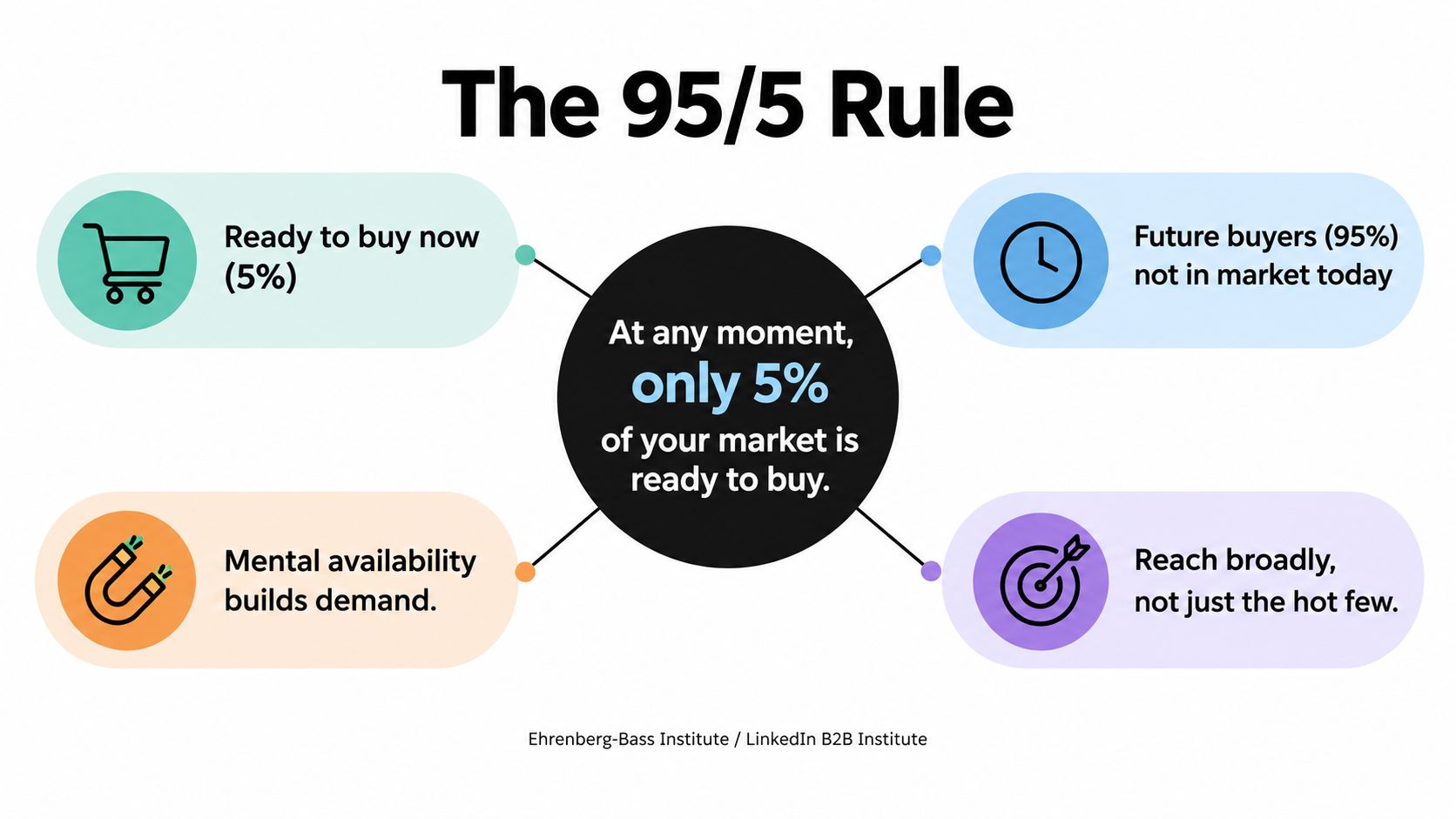
“In-market” means the buyer has a current need, budget, and willingness to evaluate suppliers. “Out-of-market” doesn’t mean irrelevant. It means the purchase isn’t happening immediately.
Apply the principle in two lanes
Your marketing needs a lane for each group.
- Immediate demand: Make it easy for homeowners with an active problem to call, request an estimate, or book an appointment. Put service details, service areas, trust signals, and response options where visitors can find them quickly.
- Future demand: Build familiarity with people who are researching, planning, or waiting for a trigger. Use useful service content, recognizable branding, local proof, and follow-up that doesn’t pressure them into an unnecessary sale.
A five-year purchasing cycle can place roughly 20% of organizations in-market over a year, while a three-month quarter represents approximately 5% of that cycle, according to the buying-cycle explanation from Summit Partners. Home services require more careful application because a routine service, a planned replacement, and an emergency repair operate on different timelines.
A homeowner doesn’t replace a roof on the same schedule as booking a drain service. The rule gives you a useful starting lens, not a universal lead-conversion target.
Why the 5 Percent Might Be Higher for You
The standard ratio can understate urgent demand for contractors. Forrester’s 2025 analysis says the original 95% figure was not intended to be precise and reports that 78% of the 20% of buyers planning to change providers expected to do so within 12 months, equivalent to roughly 15.6% of the audience being in-market annually. See the Forrester analysis of the 95 5 rule.
Home services also move faster than slow-cycle software purchases. A broken water heater, failed furnace, storm-damaged roof, or unsafe electrical panel can create an active buying window immediately. A homeowner who showed little intent yesterday may need a provider today after equipment failure, severe weather, an insurance claim, or a seasonal breakdown.
The percentage changes by service line, so set expectations around urgency rather than applying one ratio everywhere. Emergency repair visitors usually want availability, location, and a fast response. Planned replacement prospects may compare systems, financing, warranties, and installation requirements before contacting a contractor. Maintenance visitors may be choosing a recurring provider, while future prospects are still learning about the project and waiting for the right timing or budget.
Progressive qualification gives you a better operating model than a fixed rule. Rank visitors by evidence of intent. Someone who reaches an emergency-service page, checks the service area, returns to pricing content, and views financing information deserves a different response from someone who reads a general maintenance article and leaves.
Your team has limited capacity. Route the strongest signals to immediate human follow-up, then keep uncertain visitors engaged with useful, low-pressure education. This approach applies Forrester’s criticism of the fixed 95/5 split to the urgency of home services, instead of importing a generic B2B assumption.
Practical rule: Use the 95 5 rule to explain buying cycles, then replace the fixed ratio with your own service-line data.
Review call records, booked jobs, service intervals, replacement cycles, and local search behavior. Identify the pages that appear before estimates and the behaviors that precede appointments. The useful question is not whether exactly 5% of your audience is ready. It is which visitors show enough urgency to justify human follow-up today.
The Two Jobs of Contractor Marketing
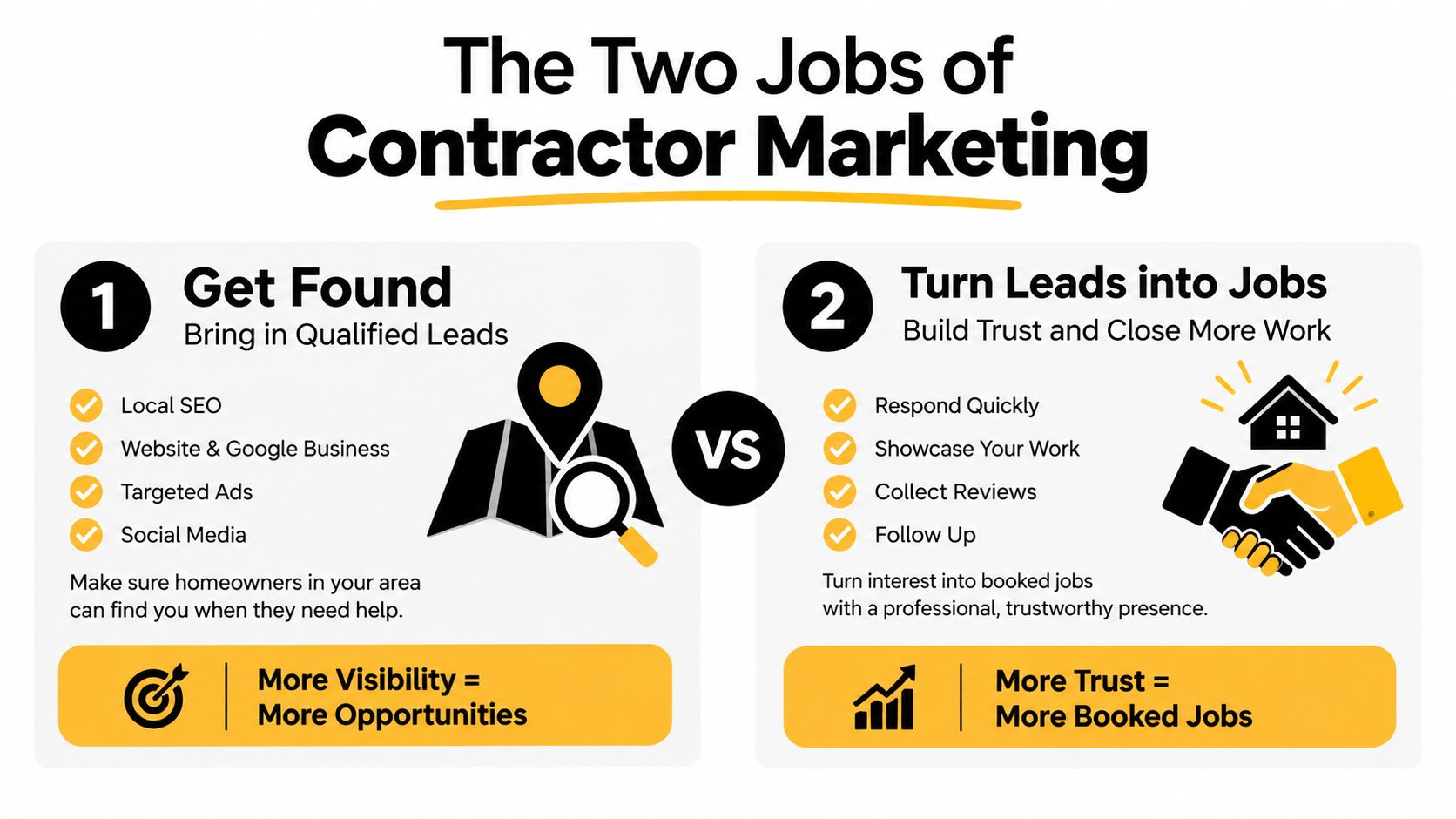
Contractor marketing has two jobs, and each needs different reporting.
The first job is lead generation for people ready to buy now. Your emergency pages need clear calls to action, visible phone numbers, straightforward forms, and a rapid response process. If someone submits an estimate request and your team waits until the next day, the marketing did its job and your operation dropped the ball.
The second job is building familiarity with future buyers. Useful maintenance guides, local service pages, project education, recognizable branding, and repeat exposure help your company stay in consideration until the need becomes active. The LinkedIn B2B Institute’s recommended response is a two-part system, immediate lead generation plus broad reach and memorable communication for the larger future-buying audience, as reported by Marketing Week.
Separate the scoreboards
Judge the immediate lane by contact rate, estimate rate, booked appointments, response speed, and revenue. Judge the future-demand lane by returning visitors, branded searches, assisted conversions, and jobs from contacts first recorded before they were ready to book.
If you measure every channel only by same-session forms, you’ll cut the work that creates future demand. That leaves you dependent on increasingly competitive high-intent keywords and makes revenue rise and fall with short-term search demand.
Watch this video for a visual explanation of the two marketing jobs:
Your educational content should answer practical questions, not fill a calendar. For renovation-related work, a resource such as the RBA Home Plans renovation guide can help homeowners understand how to evaluate a contractor before they’re ready to hire. That type of useful information keeps your company associated with the project without forcing an immediate sales conversation.
How to Identify Who Is Actually Ready
Readiness shows up in combinations of behavior, service need, location, and timing. Progressive qualification gives each signal a different weight, so your team can separate an urgent homeowner from a casual researcher without treating every anonymous visit as a sales opportunity.
Start with the service page. Emergency furnace repair, burst-pipe service, roof-leak repair, and same-day electrician pages usually indicate more urgency than a broad maintenance article. Add context by checking whether the visitor views service areas, financing, pricing, warranties, estimates, or scheduling information.
A single page rarely proves intent. Several related actions create a stronger case:
- Service-area fit: Prioritize visitors located where your crew operates.
- High-intent content: Give more weight to emergency, replacement, pricing, financing, and estimate pages.
- Page depth: Multiple related pages provide stronger evidence than an immediate exit from one article.
- Repeat visits: A return visit matters more when the visitor moves from educational content to service or booking pages.
- Timing signals: A late-night emergency-page visit or a return during seasonal demand can justify faster review.
Available industry commentary reports that about 2 to 5 visitors per 100 typically convert through a call or form, leaving approximately 95% to 98% without an explicit conversion event, according to Pipeline On’s discussion of website visitor tracking. That group is mixed. It includes future prospects, irrelevant traffic, accidental visits, and homeowners who plan to contact a business later.
Home services require a sharper interpretation than the standard B2B version of the 95/5 rule. Forrester’s critique of that broad interpretation matters here because urgency can compress the buying window. A homeowner with a failed furnace needs a response now. A homeowner researching replacement options may need useful guidance first. Segment both by evidence instead of forcing every visitor into a brand-building or immediate-sales category.
Use how to qualify franchise leads faster as a practical model for ranking fit and intent. Score the evidence, route the strongest opportunities first, and give the reviewer enough context to make a sound decision.
Identification also creates obligations. Apply clear consent and privacy policies, set sensible outreach limits, and require human review for uncertain records. How to identify website visitors can help you build a disciplined process around anonymous traffic. Recover useful demand without wasting sales capacity or damaging trust.
Recovering the 95 Percent with Pipeline On
A missed form submission is not proof that a homeowner lacks interest. It may signal research, uncertainty, poor timing, or a service need that has not become urgent. Pipeline On identifies some of those visitors and supplies contact details such as names, addresses, and emails, giving contractors a profile to review before deciding whether follow-up is appropriate.
That review should reflect the urgency-driven nature of home services. Someone returning to an HVAC replacement page after checking financing information shows a different pattern from someone reading a general maintenance article. Use page behavior, service category, location, and repeat visits to rank the opportunity. Progressive qualification lets the team respond to evidence instead of treating every anonymous visit as either a sales lead or a branding impression.
Pipeline On runs through a lightweight website script and can sync captured profiles with systems contractors already use, including ServiceTitan, Housecall Pro, Jobber, HubSpot, and Pipedrive. Follow-up can move through email, SMS, postcards, webhooks, Slack, or email alerts, based on the workflow your team selects.
The unconverted lead follow-up use case shows how to address the gap between attracting a visitor and receiving a form submission. Build ownership around that gap rather than leaving it outside the pipeline.
A practical operating sequence is simple:
- Send the identified profile to the team’s existing CRM.
- Add the visited pages, service category, location, and other relevant intent signals.
- Route high-intent profiles for prompt human review.
- Give uncertain visitors useful, low-pressure education.
- Apply consent rules, frequency limits, suppression lists, and clear CRM ownership.
- Track contacts, estimates, appointments, and revenue connected to the original visit.
Do not send every profile directly to a salesperson. A visitor who reviews emergency content and returns to a booking page may warrant a fast call or text where permitted. Someone reading general education needs a helpful touch and more time.
Pipeline On surfaces potential prospects. Your team must still verify service-area fit, respect privacy requirements, and choose the next action. That discipline turns the 95 5 rule into a qualification process suited to contractor marketing, not a reason to chase every non-converter.
Putting It All Together for Long-Term Growth
The 95 5 rule gives you a better operating model for contractor marketing. Capture immediate demand with fast response, clear service pages, and simple booking paths. Build future demand with useful education, recognizable local branding, repeat exposure, and evidence-based follow-up.
Then measure both lanes. Track booked work from ready buyers, and track how earlier contacts return, engage, and eventually become customers. Your website should create a pipeline, not just a stream of one-session conversion reports.
Start by separating your service lines by urgency, marking the pages that signal active demand, and reviewing the behavior of visitors who didn’t submit forms. Keep your strongest sales attention for high-intent profiles, while your broader marketing keeps the future buyer familiar with your company.
Pipeline On helps home-service contractors identify and follow up with website visitors who leave without calling or submitting a form, then route those profiles into existing sales workflows. Visit Pipeline On to see how you can recover more demand from the traffic your marketing already generates.
Written by
Pipeline Research Team